Introduction to stock market investing
You don't have to be a genius to invest in the stock market. I'm telling you, anyone can do it. What you should know, however, is that not everyone can take the same level of risk, and that's the key to any successful investment.
But before continuing, you need to know why you should invest in the stock market.
The most important reason to start investing isn't to become a millionaire (although that wouldn't be bad, and with some luck, it might even happen), but rather to avoid getting poorer every day. Yes, the money you use daily, so-called fiat money (euros, dollars, pesos, etc.), loses value every day because it's backed by nothing more than the empty promises of governments and financial institutions.
I still remember Lagarde (president of the European Central Bank) saying in 2021 that the rise in inflation was temporary. Lagarde was lying; we know it now, and we knew it then. In fact, she knew it at the time too.
To put it another way, over the last decade (roughly from 2015 to 2025), the purchasing power of the euro has fallen by around 30%. In other words, if you save in euros, you are 30% poorer today.
Meanwhile, the stock market has continued to rise.
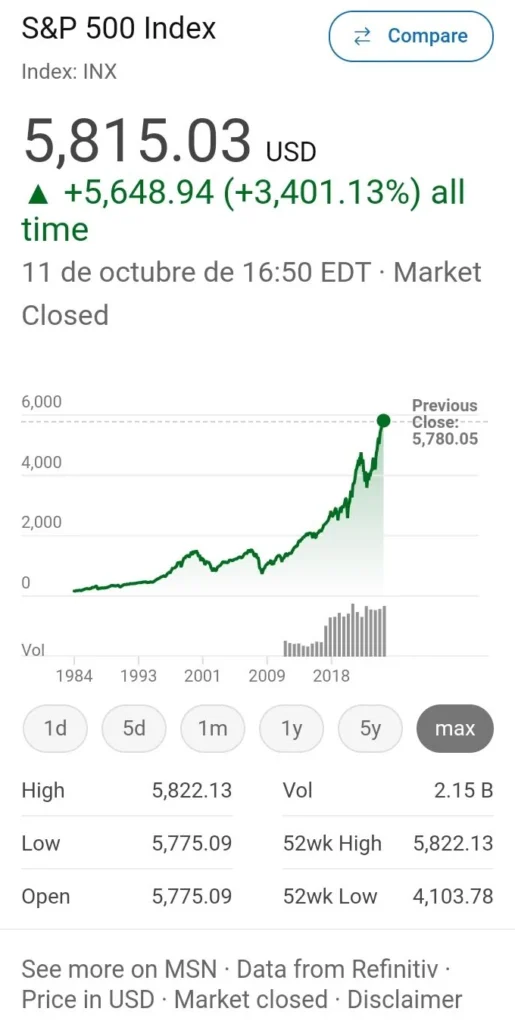
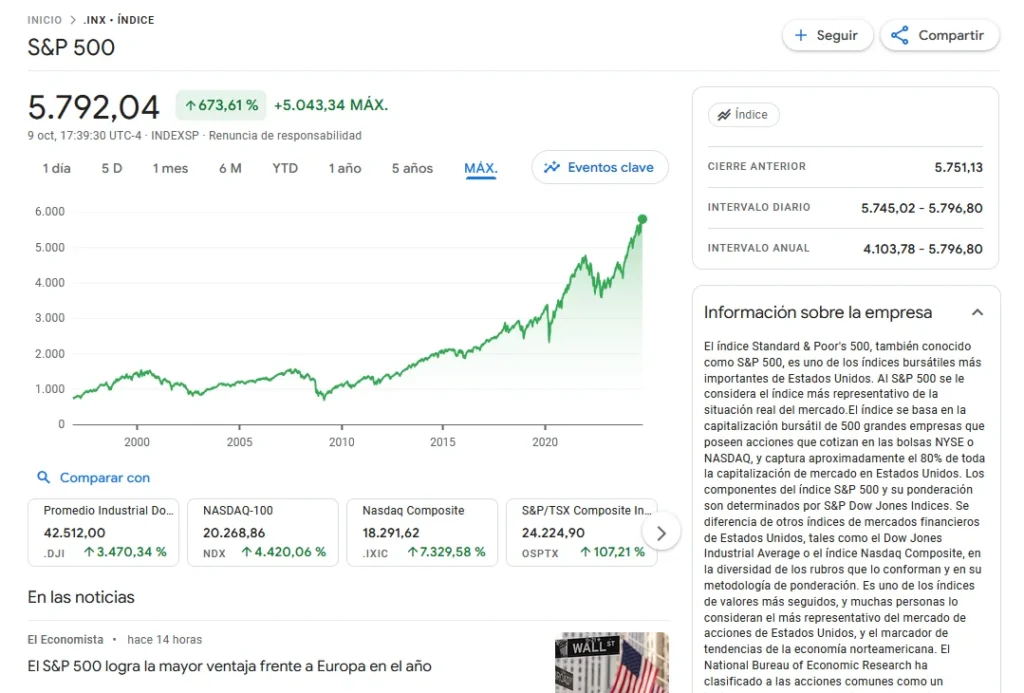
Below you can see the growth of the S&P 500 (the index of the 500 largest US companies) over the years. Imagine having invested in the S&P 500 since 2005. This is something anyone can do; you don't have to be a genius to invest in the S&P 500 (another very safe option is gold).
Click here to invest in the S&P 500 (or request help if you need it)
Investing in the stock market allows you to protect yourself from both inflation and the lies of the current government. The numbers speak for themselves: if you had invested $5,000 in Apple stock 10 years ago, today you would have more than $35,000, not counting dividends. This example illustrates the growth potential offered by the stock market.
But as I said at the beginning of this article, not everyone can take the same risk. The good news is that there's a risk level for everyone. I'll elaborate on this later in the article, but here's a quick summary:
- The first level involves long-term investment in very safe assets like gold or the S&P 500 (the index of the 500 largest US companies). This is the basics; it's like walking. Not everyone is cut out to be an elite athlete, but walking is something almost everyone can do.
- The second level is like running. It's not super difficult, but it does require some preparation because you can always end up injured if you do it wrong. Walking is for everyone; running is for those who want to take a slightly bigger risk: investing in certain stocks, manually maintaining a portfolio, and monitoring it. There are a few things you need to know.
- The third level is for professional athletes. This is for someone who dedicates a large part of their day to training. This would be day trading: buying and selling in a single day (or at most a few days). To do this, you need training and experience. The good thing is that it depends entirely on you. If you're passionate about the world of investing, you can give it a try and you'll surely succeed (I do it all the time).
How to start?
First step: Select a (regulated) broker
To buy and sell financial assets, you need a broker. You could do it through your bank, however, I don't recommend relying on them because they'll charge exorbitant fees. Stock market investing is done through a broker, but not just any broker. You must choose a regulated broker. In other words, a broker you can trust.
It's like anything else. There are very good brokers, others not so good, and others that are downright bad or even a scam.
If you're asking me to recommend one, I recommend MEXEM. If you'd like to see more options, I suggest you check out this ranking of the best brokers for investing from Spain.
Do you have questions and don't know how to open an account with the broker?
Speak with a MEXEM expert , they will guide you step by step through the process of opening your account.
MEXEM assistance in Spanish:
- 📞 910 602 762
📧 asistencia@mexem.com
🔒 Your money is protected by the strictest European regulations (CNMV, CySEC, Bafin, among others).
MEXEM assistance in Spanish:
- 📞 910 602 762
📧 asistencia@mexem.com
✅ The best of MEXEM according to users
- Low costs on routine transactions, especially stocks/ETFs
- Transparency and professionalism in their communications
- Good support and responsive customer service — some mention quick responses via WhatsApp or other channels
- Access to many trading tools and markets thanks to its link with Interactive Brokers
- It does not charge maintenance fees, fees for inactive accounts or deposits
- First monthly withdrawal free (although subsequent withdrawals may incur a cost)
- Automatic handling of certain local taxes for some countries, which saves some users administrative work
Direct access to global markets with competitive rates
- ✔️ Trades over 135 markets in stocks, ETFs, options, futures and more.
- ✔️ Professional platform with advanced tools for active traders.
- ✔️ Customer service in Spanish and personalized support in Europe and LATAM.
- ✔️ Broker regulated by CySEC and with European protection standards.

Choosing the right broker is important, in fact, very important. You need to verify that the platform is licensed by recognized regulatory bodies such as the CNMV (National Securities Market Commission in Spain), CySEC (Cyprus), ASIC (Australia), or FCA (United Kingdom), among others. These entities guarantee that your money is protected and that the broker operates under strict security standards.
When evaluating a broker, you should compare:
- Commissions and fees
- Trading platform (look for a simple one when starting out)
- Customer service (make sure it's in Spanish)
- Educational resources (if you are interested in learning more)
Second step: What do I buy now?
Now that you have your account with MEXEM (or with the broker you have chosen) you can start trading on the stock market, that is, you can buy and sell stocks, ETFs, currencies, etc.
This is where the different levels of risk that I mentioned at the beginning of this article come into play
Imagine that investing is like doing physical activity.
Not everyone needs to be a professional athlete to be fit, just as you don't need to be a stock market expert to grow your money.
🥇 Level 1: Walking = Investing in ETFs for the long term
Walking is something we can all do. It requires no technique, just consistency. In the financial world, this is equivalent to investing in ETFs (index funds), such as those that track the S&P 500 (the 500 largest US companies) or the price of gold.
These funds are diversified, meaning they spread risk across many companies or assets. They're like baskets that combine multiple assets or replicate indices. The selection is enormous, and there are ETFs for just about anything you can imagine (you have ETFs for gold, top European companies, top tech companies, emerging markets, Chinese companies, etc.). You're not betting on a single winner; you're betting on them all (with an ETF, you're buying a basket).
You might make slow progress, but you almost always make progress. It's the safest and most sensible way to invest for the long term. And definitely the least risky.
👉 Who should invest in ETFs?
If you have a child and want to secure their future by investing for the long term (10+ years), this is the best way to do it. It's simple: just make regular contributions (this strategy is called dollar -cost averaging) and let time and compound interest do their work.
You can invest €50, €100, or whatever you like each month. It may seem like a small amount, but remember that you're investing for the long term. What matters is consistency. In 15 years, you'll have accumulated a considerable sum.
You should do the same if you're worried about retirement. Or even if you just want to have a nice sum of money saved for when you reach midlife. With this type of investing, all you really need is time, so the sooner you start, the better.
🥈 Level 2: Running = Choosing individual actions
Running now demands more knowledge and preparation. You need to know how much you can push yourself, how to avoid injuries, and what pace to maintain. In investing, this is equivalent to choosing stocks yourself, for example. You no longer have a basket that includes all the best from the US or Europe; now all the work depends on you: you research the companies, analyze their performance, and assess whether they are expensive or cheap.
Here the benefits can be greater, but mistakes also carry more weight. A bad choice can trip you up, and a good one can take you further than average.
👉 Who should invest in this way?
Choosing stocks requires some knowledge of company valuation. This is usually done by someone who knows how to analyze companies or has specific data. The truth is, if you invest in solid companies like Apple, Amazon, Alphabet (Google), etc., you'll rarely go wrong (I'm always referring to long-term investing).
What I don't recommend is buying a Chinese company you know nothing about just because you read something about it in the newspaper. If you don't understand what the company does, it's best not to buy it, no matter how tempting it may seem.
🥉 Level 3: Being a professional athlete = Trading
Competing professionally is a different story altogether. It requires daily training, strategy, mental discipline, and emotional control. Every second counts. That's precisely what tradingis: buying and selling assets in the short term (sometimes in minutes or hours) to capitalize on small market movements.
A trader lives constantly monitoring charts, news, and economic data. They can earn a lot, but also lose it quickly if they lack a method or proper risk management. It's not a game: it's a profession.
👉 Who should trade?
Being a trader isn't easy. It's something only someone who has studied and practiced extensively can do (are you looking for a trading course?). It's true that you can earn a lot, a huge amount, trading... but you have to know exactly how to do it. It's not for everyone.
Three levels, one for each person
The key to all of this is knowing what level of risk and commitment you are willing to take.
Not everyone was born to compete in the Olympics, but we can all start by taking a walk. Often, financial freedom doesn't depend on being the best traders, but on being consistent and starting early.
Common mistakes to avoid when investing in the stock market
mistakes when investing in the stock market can cost you thousands of euros and years of wealth growth. Knowing these pitfalls will allow you to protect your capital from day one.
Lack of diversification: the most costly mistake
Concentrating all your money in a single stock represents unnecessary risk. If that company faces financial problems, corporate scandals, or simply a bad quarter, your entire portfolio can plummet. Imagine having invested €10,000 exclusively in a tech company that loses 40% of its value in a matter of weeks. That blow could have been mitigated by spreading your investment across different sectors, geographies, and asset classes (this diversification would have been achieved automatically with an ETF).
Following advice without your own research
Your brother-in-law recommends a "safe" stock he bought. Your friend insists you invest in the same cryptocurrency he owns. These well-intentioned recommendations may not be suitable for your financial situation, risk tolerance, or time horizon. Every investor has unique circumstances. What works for others may be disastrous for you.
The silent enemy: emotions
Euphoria drives you to buy when prices are at all-time highs. Panic makes you sell at the bottom, locking in losses that could have been recovered. This emotional behavior destroys more portfolios than any economic crisis. Maintaining discipline and sticking to your original investment plan, regardless of market noise, separates successful investors from those who consistently lose money.
Conclusion:
Investing in the stock market isn't a game of chance or a magic formula for getting rich overnight. It's a process that usually requires patience and discipline. But as you've seen, there's something for everyone.
Choose a risk level that's right for you, one that suits your personality and financial goals. Remember that long-term investing with ETFs is for everyone. If you enjoy it and feel comfortable with it, you can do more later (even trading), but to get started, you don't need anything.
Key points:
- Avoid common mistakes: don't invest based on emotions, don't follow advice without researching it, don't put all your eggs in one basket
- Choose a good broker (always trade with a regulated broker... I recommend you look at MEXEM 's proposal ).
- Choose a risk level that's right for you. Remember that you don't need to know anything to invest in ETFs (gold, S&P 500, etc.).
Believe me, the stock market rewards those who are patient and disciplined. Your future self will thank you for it.
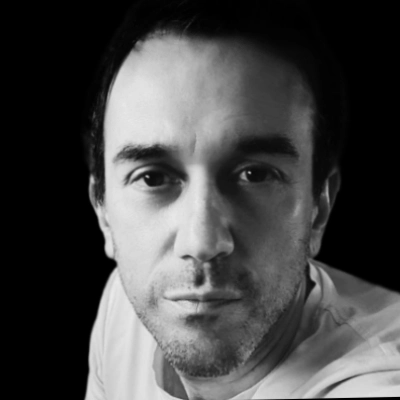
My name is Norberto. I've been investing and trading for over a decade. I'm also the author of the Topstep Experience trading course. If you want to learn how to invest and have any questions, feel free to contact me.
You might also be interested in
HOW TO START INVESTING IN THE STOCK MARKET?

BITCOIN VS GOLD: WHERE TO INVEST FOR THE LONG TERM?
Discover the key differences between investing in gold and Bitcoin.