Choosing a good trading course is more important than it seems. Not because of the typical motivational phrase "invest in yourself," but because the quality of the training often makes the difference between moving forward with a clear plan or getting stuck going around in circles, jumping from strategy to strategy, burning through accounts, and worse, wasting time.
And yes, the course market has changed dramatically. Before, it was almost entirely in-person, expensive, and with few leading providers. Today, there's everything. Recorded courses, mentorships, communities, academies specializing in different styles, programs for funded accounts, algorithmic training, order flow training… options for almost any budget and learning style.
The problem lies on the other side. There are also more scams, more inflated promises, and more "gurus" selling a lifestyle that has nothing to do with real trading.
So this guide is about that. About filtering. About knowing what to look for before you pay. And about choosing a course that fits you, your style, and your starting point.
I've been in the financial markets for almost a decade, specializing in stock trading and funded accounts, with a focus on price action and volume analysis. I'm not just saying this to show off. I'm saying it because I've seen the same pattern repeat itself: good, disciplined people who fail because they learn poorly or only half-heartedly.
Let's take it one step at a time.
1) Before looking at courses: decide what type of trader you want to be (even if it's just a temporary decision)
This may seem like a minor detail, but it's fundamental. A course can be excellent and still be a bad purchase for you, simply because it teaches a style that doesn't fit your life, your personality, or your stress tolerance.
The most common styles:
Day Trading
Trades that open and close on the same day. A lot of focus, a lot of repetition, and you need time in front of the screen (though not all day). It can be very technical and very process-oriented.
Swing Trading
Trades that last for days or weeks. Less screen time, more patience. Ideal if you work or can't be glued to the market. The challenge here is usually to withstand price movements, manage uncertainty, and avoid overtrading.
Scalping
Trading sessions lasting minutes (sometimes seconds) or a few hours. Fast pace. Demanding. If you struggle to make quick decisions or are emotionally affected by the outcome of each trade, it's usually tough.
Position trading
Months or years. It's more like time-based investing. It requires a different mindset and typically combines macroeconomic analysis, fundamental analysis, and slower-paced risk management.
You don't have to commit to one course forever. But it's a good idea to choose one that aligns with the style you'll be practicing for the next 3 to 6 months. Otherwise, you'll run into the typical problem: you're learning swing trading, but you're watching scalping videos on TikTok, and in the end, you won't do anything right.
2) If you're a beginner: start simple (and be careful with leverage)
I'd say this even if I got canceled for being boring: if you're starting out, you don't need leverage. Or futures. Or options. Or "trading news with 50x.".
What usually works best at the beginning:
- Stocks (a very good area for understanding structure, liquidity and management).
- Cryptocurrencies (only if you understand that the volatility will require twice the control).
Learn to survive first. Learn to execute a plan. Learn to measure results. Learn to understand what you're doing. More complex tools will come later.
A serious course for beginners doesn't push you to trade big. It teaches you to trade small and think clearly.
3) Clear signs of fraud or a weak course (and yes, they are easy to spot)
You don't need to be Sherlock Holmes. Some things smell fishy from the very beginning.
Promises of fixed profitability
"Earn €300 a day" or "10% weekly" as if it were a salary. That doesn't exist in trading. There are winning streaks, losing streaks, and above all, there's variance.
Results without context
Screenshots from a spectacular day, but zero information about:
- account size
- drawdown
- number of operations
- period of time
- commissions
- methodology
A serious trader doesn't sell you a picture. They teach you a process.
Generic or suspicious testimonies
If all the reviews are along the lines of "amazing, it changed my life" without any details, that's a bad sign. And if you can't verify them outside of their website, even worse.
Lack of transparency
Who teaches? What have they done? What is their actual experience? In which markets do they operate? How is the course structured? What is included and what is not?
If it's hard to find, there's usually a reason.
4) Research reputations thoroughly (don't rely on just one source)
This is key to avoiding trap courses.
What would I do before paying:
- Search for opinions in various sources (Rankia, forums, Reddit, YouTube, Twitter, Trustpilot if applicable).
- Distinguish genuine criticism from gratuitous hate. Sometimes there's competition, sometimes there are frustrated students. Okay. But if you see recurring patterns, listen.
- Detect “recurrences”: constant complaints about lack of support, unclear practices, aggressive upsells, inflated results.
And a trick that almost nobody does, but it works.
Connect with alumni.
If the course has a community or a visible presence on social media, try talking to 2 or 3 people. Simple questions:
- What was the best thing about the course?
- What was missing?
- Did they help you when you got stuck?
- Would you buy it again?
That gives you a much more realistic picture than any sales page.
5) Evaluate the trainer as if you were going to hire someone (because you are)
There's no romance here. You're paying for a skills transfer.
Look at these things:
- Track record and longevity: I don't care so much about a 3-month hit. What matters to me is that it lasts for years, with a consistent approach.
- True specialization: the one who "masters everything" usually masters very little. I prefer someone who is very good in a specific style.
- Teaching ability: knowing how to trade is not the same as knowing how to teach. There are experts who explain terribly. And there are good traders who teach very well and save you years of learning.
- Operational transparency: they don't need to give you their bank statement, but reasonable traceability is essential. Examples, explained procedures, clear risk management, and limits.
In your choice, the trainer weighs almost more than the syllabus.
6) The most underestimated factor: the tutor and feedback
Let me tell you straight. A recorded course might be perfect, but without feedback, learning becomes slow.
An experienced tutor makes a difference because:
- Adapt the content to your level and style
- It corrects specific errors (not generic “psychotrading”)
- It reviews transactions with you and tells you where you're cheating yourself
- It offers sessions to answer questions with real-world examples
- It gives you practical, market-based advice, not theory-based advice
If you're choosing between two courses and one offers mentorship or serious follow-up, it usually wins, even if it's more expensive.
7) Community and post-course support: what happens when the fun part is over
Another critical point. Most people are motivated the first week. By the second week, doubts arise. By the third week, the first drawdown occurs. And that's where the "I consumed content" separates from "I'm learning.".
Seeks:
- active community (Discord, Telegram, private forum)
- live sessions or regular Q&A
- Material updates (markets change, and so do platforms)
- an environment where processes are shared, not just inputs
Trading is quite solitary. A good community supports you when you lack clarity. And it also holds up a mirror, which is helpful.
8) Budget: how to think about the price without deceiving yourself
The most expensive option isn't always the best. And cheap options often end up being expensive, because they leave you with half-truths.
Helpful questions:
- Does it include tutoring or just videos?
- How many hours of real content is there (not filler)?
- Is there guided practice and review?
- Do you have support afterwards?
- Are there any clear guarantees or conditions?
And a simple idea: if the course saves you six months of trial and error, it can be considered cheap even if it costs more. The real cost in trading is usually wasted time and repeated mistakes.
Recommended courses (according to style and level)
There's no single "best course for everyone," but there are reputable programs with a clear focus. Here are some well-known options, along with the types of students they typically suit.
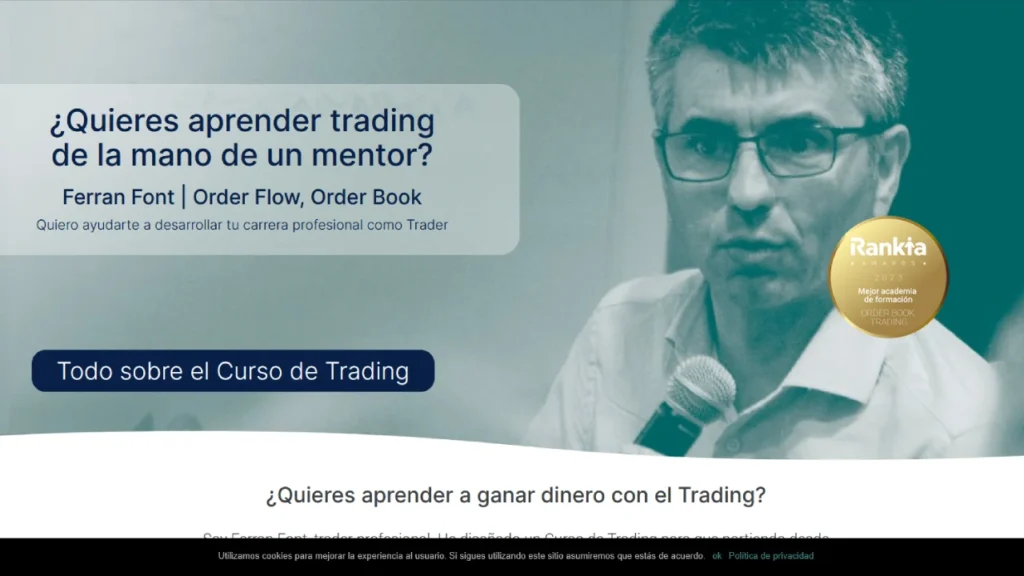
1) Ferran Font: Order Book Trading (⭐⭐⭐⭐⭐)
- Read Ferran Font's review
- More information: www.orderbooktrading.com
Day trading course based on reading the order book with a professional focus. Ferran Font was awarded Best Academy by Rankia 2023/24 , is a trading champion (Wilmott Quantitative Trading 2014), and frequently collaborates with the Madrid Stock Exchange.
For whom:
- basic-intermediate to advanced level
- Are you interested in day trading with a structured methodology?
- Do you want an academy with a verifiable reputation and public profile?
Why it stands out:
- It covers a wide spectrum of what trading is (then you decide what you want to focus on)
- verifiable trainer profile
- technical and execution-oriented approach
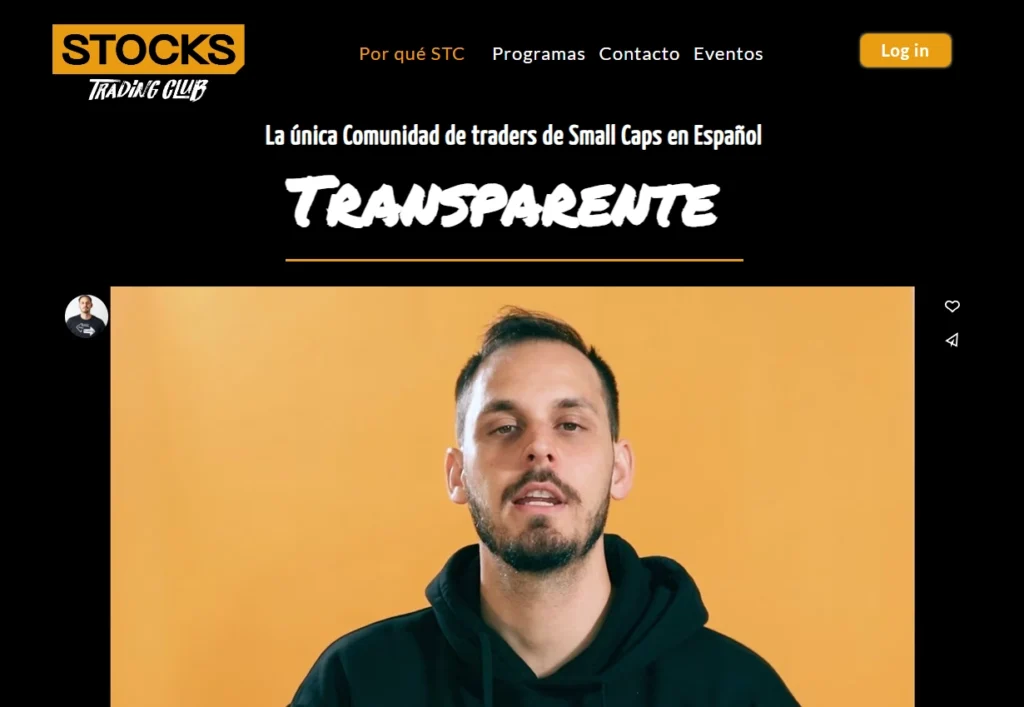
2) Stocks Trading Club (⭐⭐⭐⭐⭐)
- Read the Stocks Trading Club review
- More information: www.stockstradingclub.com
Course on day trading with small caps (advanced approach). Small caps are a world apart: high volatility, many opportunities, but also pitfalls.
For whom:
- You already have a base
- You're looking for a more aggressive and specific style
- You can be on screen at specific times
Implicit requirement:
- tolerance for speed and strong discipline
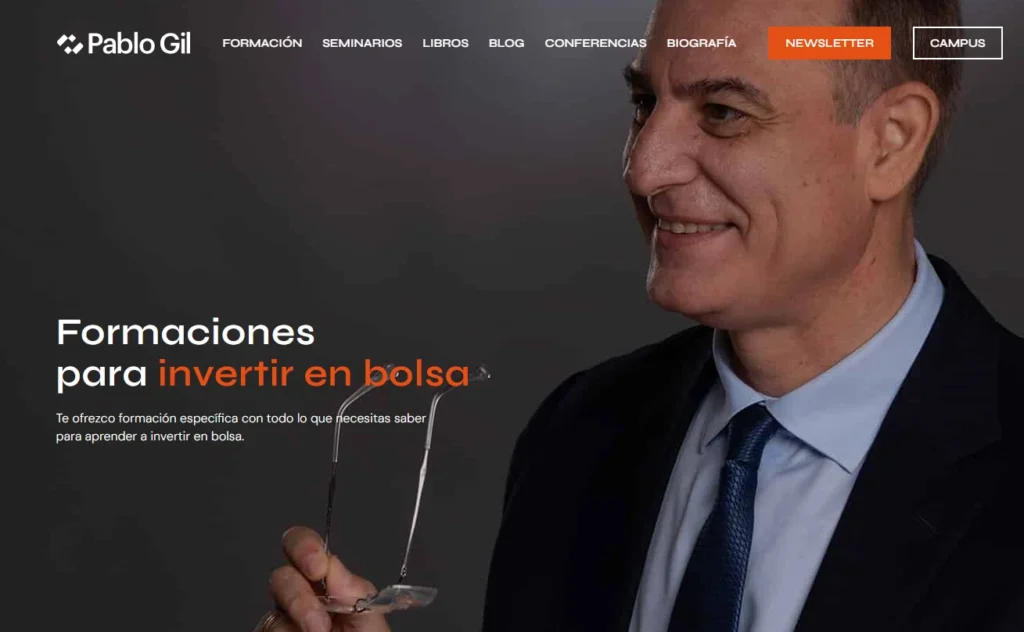
3) Pablo Gil Training (⭐⭐⭐⭐)
- More information: www.pablogiltrader.com
This Master's program is more focused on investment and macroeconomics, with risk management and psychological control. It's very useful if you want to understand the "why" of the market and not just buy and sell.
For whom:
- basic to intermediate
- It appeals to you in the medium and long term
- You want macroeconomic framework and management
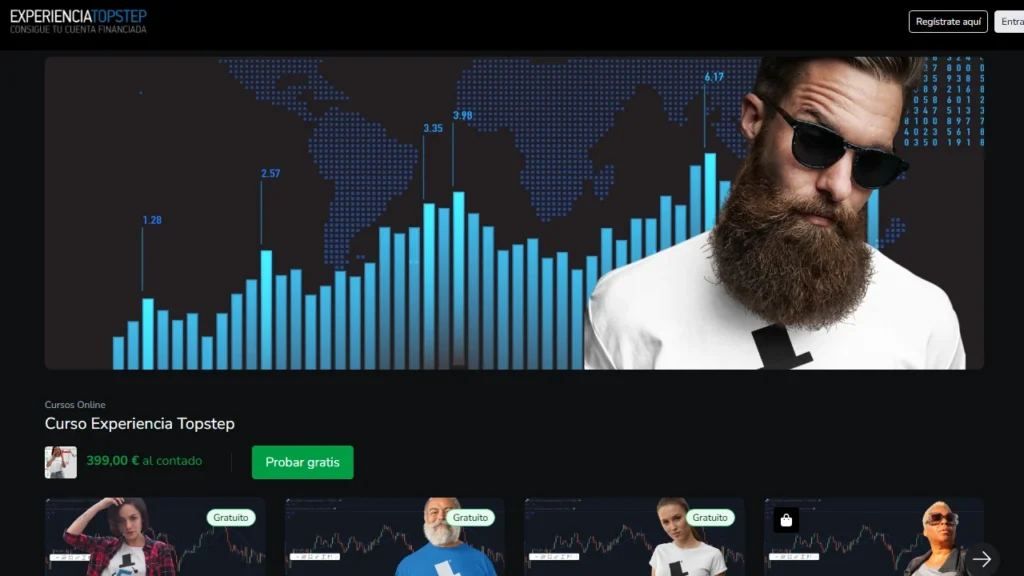
4) Topstep Experience Course (⭐⭐⭐⭐⭐)
- More information: www.curso.experienciatopstep.com
Day trading geared towards funded accounts. It's an accelerator if you take advantage of it.
For whom:
- basic-intermediate level
- It focuses on a style of trading
- Do you want a clear path to funded accounts?
- You benefit from direct guidance and constant feedback
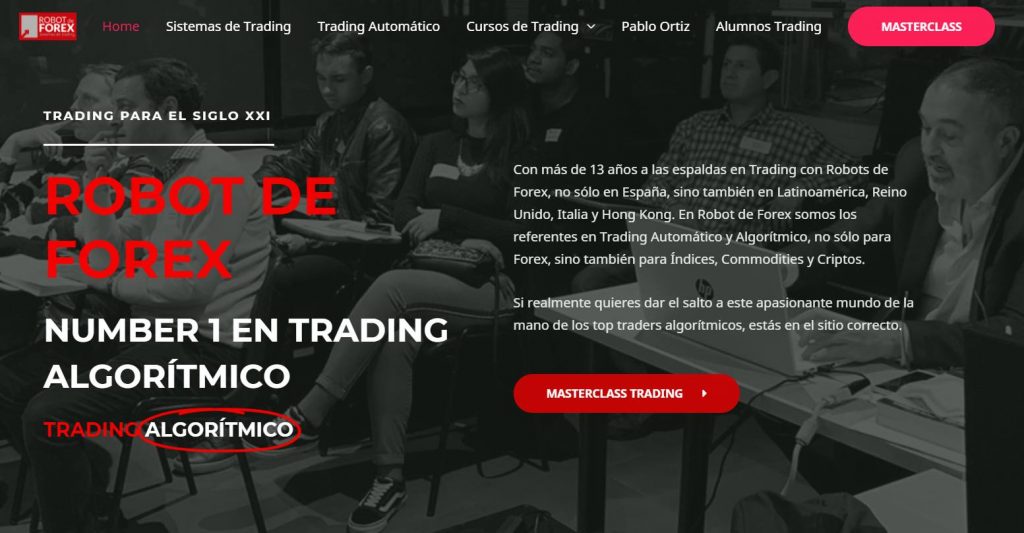
5) Forex Robot (⭐⭐⭐⭐)
- More information: www.robotdeforex.com
Algorithmic trading course , automation and robots. Here the profile changes: more logic, more backtesting, more statistics, less “market feel”.
For whom:
- Intermediate to advanced
- Do you like programming or at least understanding systems?
- You prefer objective rules
Quick checklist before you sign up (use it as is)
If I had to summarize it in a mini list, it would be this:
- Does the course fit my trading style and available time?
- Does the trainer have verifiable experience and a consistent reputation?
- Is there real transparency, or just marketing?
- Does it include tutoring or feedback on my trades?
- Does it have post-course support or an active community?
- Can I see the syllabus, methodology, and examples before paying?
- Have I checked opinions from various sources and, if possible, spoken with former students?
- Are they selling me a process or are they selling me dreams?
If they miss 3 or 4 points, I wouldn't go in.
Conclusion: The right course doesn't make you win, it makes you learn without getting lost
A good trading course doesn't promise you money. It promises structure. It gives you a way of looking at the market, a practice system, and a way to measure whether you're improving or not.
And then comes the hard part, which is doing it. Week after week. With discipline. With risk management. With patience.
But at least, if you choose wisely, you have an advantage. Not because the market is easier, but because your path is cleaner. Less noise. Fewer strange turns. More clarity.
If I had to give you one last piece of advice: choose a style, choose a trainer with a proven track record, and prioritize mentoring and support. That's usually where the real leap forward happens.
My name is Norberto. I've been investing and trading for over a decade. I'm also the author of the Topstep Experience trading course. If you want to learn how to invest and have any questions, feel free to contact me.
You might also be interested in
HOW TO START INVESTING IN THE STOCK MARKET?

ARE FUNDING ACCOUNTS A SCAM? (HOW TO DISTINGUISH THEM)
Are funding accounts a scam? 9 signs to spot it

THE 10 TYPICAL MISTAKES OF THE BEGINNER TRADER (AND THE ANTIDOTE)
Don't get depressed. We've all made these mistakes, it's just..