
Trading involves buying and selling financial assets (such as stocks, currencies, etc.) in the short term, with the aim of profiting from price fluctuations.
Interest in trading has skyrocketed in recent years. Today, anyone can trade stocks from home by pressing a couple of buttons on their computer screen. With an internet connection and the right software, you can analyze real-time charts, execute orders instantly, and manage risk like a professional.
Trading has opened the door to anyone who wants to diversify their income streams or develop a new financial skill.
Key concepts of trading
Mastering the fundamental concepts makes all the difference in the world of trading. Here's a breakdown of the essential terms:
1. Trading
It consists of buying and selling financial assets (stocks, currencies, commodities, cryptocurrencies) with the aim of making a profit from price fluctuations, usually in short or medium terms.
The trader seeks to profit from market movements through technical analysis, fundamental analysis, or a combination of both.
2. Investment
It is based on acquiring assets to hold them for long periods, betting on their appreciation over time and prioritizing stability over risk.
Investors typically look at macroeconomic factors and fundamentals of the company or asset.
3. Speculation
It involves taking high risks in pursuit of quick and significant returns. Speculators operate with much shorter time horizons than investors, accepting volatility as part of their strategy.
What does a trader do?
Becoming a trader requires discipline, continuous training, and a strategic attitude towards each trade.
- Analyze the markets and identify opportunities according to your strategy.
- Execute buy/sell orders using digital platforms.
- Manage risk by applying limits (stop loss) and controlling emotions.
- Evaluate results and adjust your method constantly.
What do users think about Vantage?
- ✔️ Offers MetaTrader 4, MetaTrader 5 and other advanced platforms.
- ✔️ Outstanding customer service and fast order execution.
- ✔️ Requires a high minimum capital to access premium tools.
- ✔️ It is regulated by the FCA (UK) and ASIC (Australia).
- ✔️ Provides analysis and education to improve trader performance.

Types of trading and trader profile
Different types of traders according to their profile and strategies
When starting out in the world of trading, it is crucial to recognize the different types of traders that exist:
- Scalpers: They trade in intervals of seconds to minutes. They seek small profits in multiple trades.
- Day traders: They execute trades within a single day. They focus on profiting from daily market fluctuations.
- Swing Traders: They hold positions for days or weeks. They seek to capture more significant price movements.
- Position Traders: They hold investments for months or years, based on fundamental analysis and long-term trends.
Click here to discover the best courses to learn how to profit from trading
Profile of a successful trader
A successful trader usually has the following characteristics:
- Discipline: Stick to your trading plan without deviating.
- Patience: Waiting for the right moment to enter and exit the market.
- Risk management: Applying strategies to protect your capital.
- Technical and fundamental analysis: In-depth knowledge to make the right decisions.
Skills needed to succeed as a trader
To succeed in trading, it is essential to develop certain skills:
- Analytical thinking: Ability to interpret graphs and data.
- Emotional control: Staying calm and avoiding impulsive decisions.
- Financial knowledge: Understanding financial markets and products.
- Discipline: To rigorously follow a predefined strategy.
With these skills, you will be better prepared to face the challenges of the financial market.
💬 Join the Topstep Experience Community on Discord
Focus on execution and management, no fluff. My trading strategy explained with examples.
🚀 Join the DiscordHow much can you earn with trading?
This is perhaps the most difficult question to answer. The answer depends heavily on your trading style, your experience, and, of course, the size of your account. The truth is, the easiest way to make money in the stock market is to invest for the long term using (DCA).
This way, you could easily see your account grow by 10%–20% annually. Of course, this isn't trading; this is investing.
Trading is more complex, and what you can earn from trading depends on many factors, including: the size of your account, the time you dedicate, and the risk you take.
I know traders who earn between $1,000 and $10,000 a month. Some have even earned more than $50,000 in a single month. But these are professional traders; they dedicate all day to their trading. Their accounts are large, and they have complete control over their emotions. You won't see them complaining about losing $1,000 in a day, or $2,000 or $5,000.
Therefore, answering the question of 'how much can you earn trading' is really very difficult. Below is a screenshot showing the size of my trades via the FTMO funding account ( What are funding accounts? ).
Perhaps this will give you an idea of what a person who trades but is not a professional trader can gain or lose in each transaction.
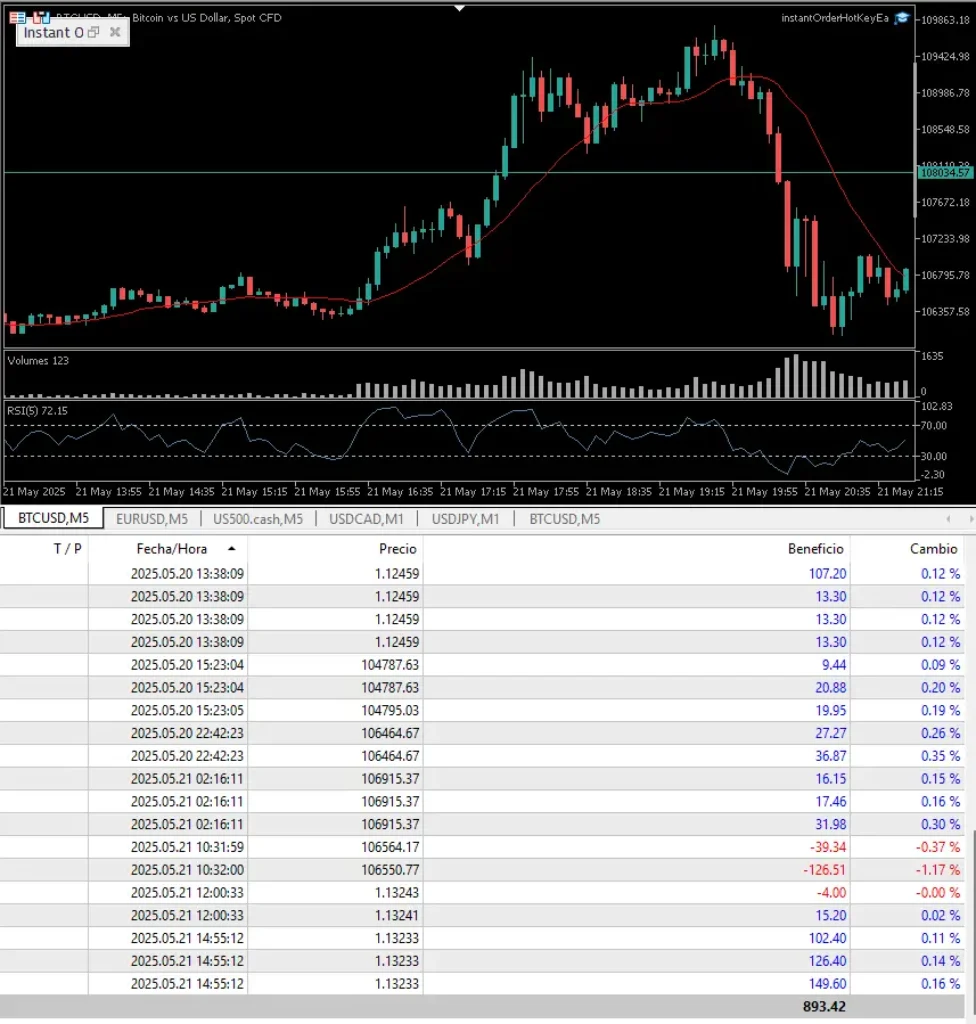
MetaTrader 5 with FTMO
To start trading, you'll need a reputable and regulated broker. One of my favorites for trading is Vantage. This broker is regulated and approved in the UK and Australia, and it also allows you to trade using MetaTrader, one of the easiest platforms to use.
Do you have doubts and don't know where to start?
Get your questions answered by talking to an expert; they will guide you step by step through the account opening process.

Vantage Support in Spanish:
- 🌐 Online help
📧 support@vantagemarkets.com
🔒 Your money is protected by the strictest regulations in Australia and the UK (ASIC, FCA, etc).
Vantage Support in Spanish:
- 🌐 Online help
📧 support@vantagemarkets.com

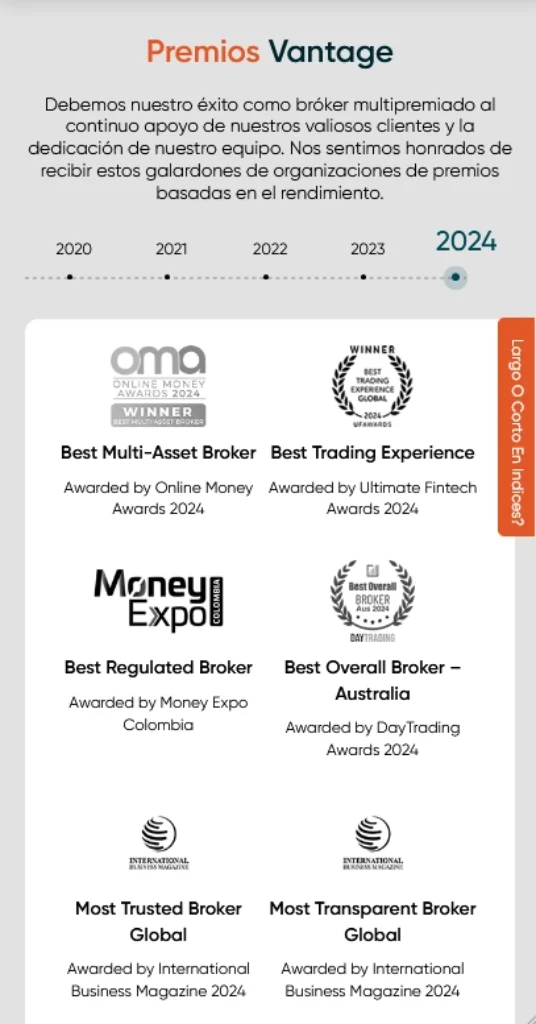
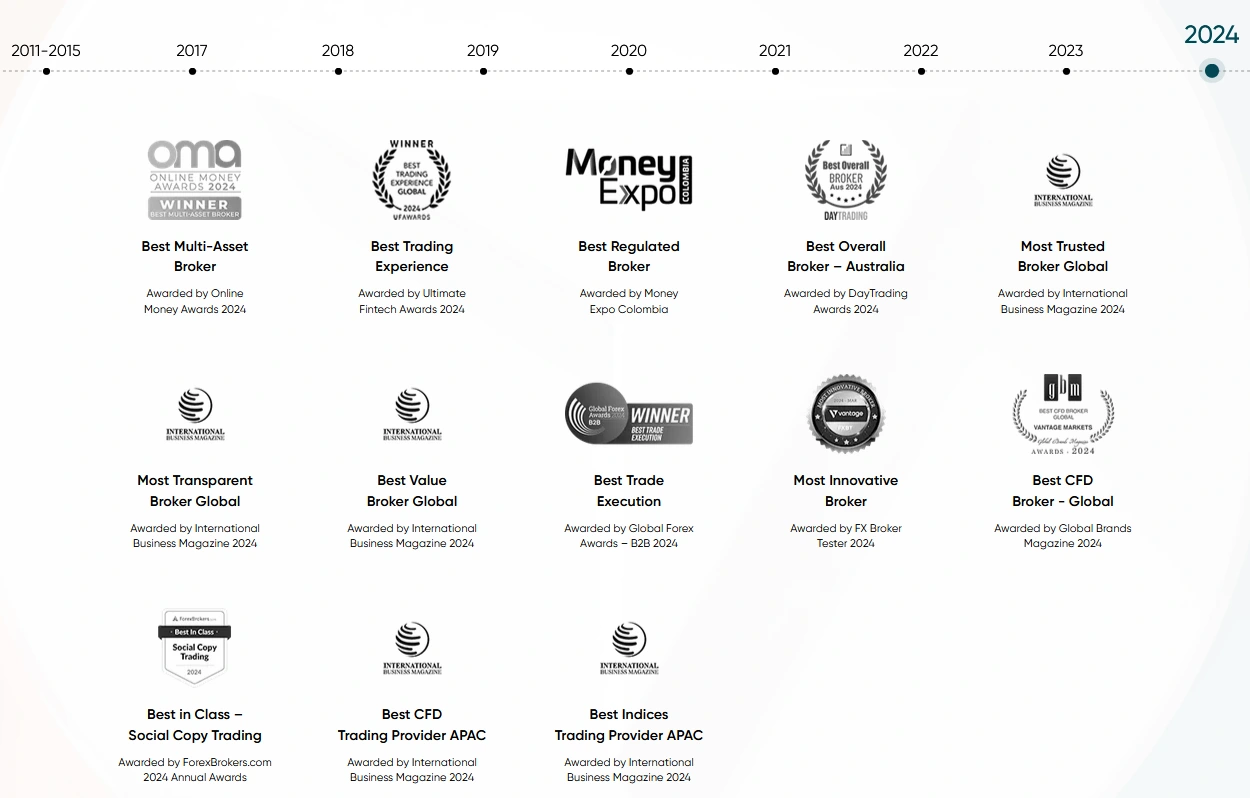
Vantage awards and recognitions
Essential tools for trading
Having the right tools is essential for successful trading in the financial markets. Below are the key trading tools you need to master from the start:
- Trading platform: This is the digital environment where you execute your trades. Popular platforms such as MetaTrader 4 (MT4), MetaTrader 5 (MT5) , and cTrader offer access to a wide variety of assets and allow real-time trading.
- Technical analysis software: Tools like ProRealTime, TradingView , and the built-in charts in MT4/MT5 are essential for interpreting market trends, patterns, and key levels. They allow you to view advanced charts, apply technical indicators, and visually customize strategies.
- Regulated broker: Security begins with choosing an authorized and reliable brokerthat provides cost transparency and fund protection.
- Risk management plan: It's not just a mental tool, but a functional one. Some software allows you to automatically set stop-loss or take-profit orders to limit losses and secure gains.
- Community or mentorship: Participating in specialized forums or having the guidance of experienced traders helps to resolve doubts quickly and accelerate your learning curve.
Risk management in trading
Risk management is the foundation for surviving and thriving in trading. Without it, any strategy or tool becomes meaningless after just one poorly managed trade. The goal is not to avoid losses, but to limit their impact and protect initial capital.
Key rules to protect your capital:
- The 2% Rule: Never risk more than 2% of your account on a single trade. For example, if you have €1,000, your maximum loss per trade should be €20.
- Using stop loss: Always place stop loss orders to automatically limit losses if the market moves against you.
- Control leverage: While using leverage can multiply your profits, it also dramatically increases the risk of losses and quick liquidations. Use it with caution and only when you fully understand how it works.
- Diversification: Don't put all your money into a single asset or market; spread your capital across several opportunities to reduce risk.
A good trader prioritizes preserving capital over seeking quick returns, establishing clear rules that are followed without exception.
How to get started in trading: A step-by-step guide
Becoming a trader requires structure and method from day one. To progress safely, follow these seven key steps to learn trading step by step:
1. Basic Training
- Read introductory books, follow specialized blogs, and join trading communities.
- Take time to understand key concepts such as leverage, stop loss, technical analysis, and risk management.
- A good trading course always helps.
2. Choose the Right Financial Product
- Familiarize yourself with stocks, currencies (forex), indices, or cryptocurrencies.
- Start with a product that is understandable and accessible to you.
3. Select a Regulated Broker
- Verify that it is regulated by official bodies (CNMV, FCA, etc.).
- Evaluate fees, ease of use, and customer service.
4. Configure your Essential Tools
- Install and familiarize yourself with a trading platform (MetaTrader 4/5, cTrader) and some good technical analysis software (TradingView and ProRealTime are good options).
- Use demo accounts (or funding accounts) to practice without risking real money.
5. Design your Trading Plan
- Define clear rules about when to enter and exit the market.
- Set realistic goals and loss limits.
6. Apply Risk Management
- Always use stop loss.
- Do not risk more than 2% of your capital per trade.
7. Operate with Reduced Capital to Start
Start with small amounts, between €100 and €200, until you gain real experience.
The most common mistakes when starting out include trading without a defined plan, not using stop-loss orders, and letting emotions take over after a loss. Learning to trade from scratch requires discipline, patience, and constant emotional control.
Conclusion
Trading is a journey, not a shortcut. This activity requires constant learning and discipline to achieve success. Every trade in the market is an opportunity to improve your skills and knowledge.
- Discipline: It is essential to stay calm and follow your trading plan without letting emotions get the better of you.
- Learning: The world of trading is constantly changing. Stay up-to-date with the latest market news and trends.
- Strategy: Developing a solid strategy and being willing to adjust it according to market circumstances is vital.
Knowing what trading is and how to get started is just the first step. True skill is cultivated over time through practice, analysis, and adaptation. Adopting a continuous improvement mindset will allow you to face the challenges of the financial markets with confidence.
"Success in trading is not measured by quick profits, but by the ability to learn and adapt over time."
Remember that every trader learns at their own pace. The important thing is to persevere and not get discouraged by initial difficulties. With dedication and effort, you can become a successful trader.

My name is Norberto. I've been investing and trading for over a decade. I'm also the author of the Topstep Experience trading course. If you want to learn how to invest and have any questions, feel free to contact me.
You might also be interested in
HOW TO START INVESTING IN THE STOCK MARKET?

HOW TO INVEST IN CHINA
Opportunities, risks, and the best ETFs for investing in China.

GUIDE TO CHOOSING A GOOD TRADING COURSE (AND AVOIDING THE SCAMMERS)
Learn how to choose the best trading course, avoid scams…