
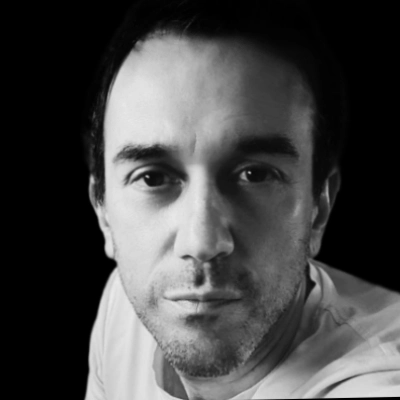
 Norberto Viale


I specialize in Forex and offer mentoring upon request. I own an Epiphone Les Paul guitar and I'm passionate about surfing. I recently watched the original version of Point Break and fell in love with the Red Hot Chili Peppers all over again 🙂
How long will it take to become profitable?
This is the question most people ask themselves at the beginning, when we have just started to become interested in the world of trading and stock market investing.
The truth is, everyone is different, and I'm afraid there's no single answer to this question. I could tell you two years of hard work and effort, but you might need five or even ten.
What I'm absolutely certain of is that understanding the markets takes time; it's not something you learn in a two-month stock market course, not by a long shot. You'll need a lot of observation time, a lot of trial and error. Reading books that offer a realistic, critical, and inspiring perspective and that integrate technical and practical knowledge is always helpful, but it doesn't save you the time you'll spend staring at the charts.

Being a good trader depends on your willingness to learn, dedicating many hours to observing charts, and being able to absorb knowledge and experience like a sponge.
Emotions such as euphoria, fear, and anger will be your companions on this long journey, therefore, you will have to make an effort to understand them and not let them control you.
The most complex part will undoubtedly be preventing them from interfering with your operations (What is the best trading system?).
Emotional management is more complex than the technical aspects. Knowledge and strategies applied mechanically and systematically may yield occasional results, but if you can't handle the stress and anxiety caused by losses, you'll never learn to win. Of course, there are ways to manage these emotions, and you should also know that not all trading styles expose you to them with the same intensity.
“No man has ever attained excellence in any art or profession without having gone through the slow and painful process of study and preparation.”.
Mark Douglas
Markets have cycles; that's the first thing we notice when we look at the charts. Understanding the characteristics of each cycle and observing its evolution takes time; it's not easy. There are always far more variables than we can imagine.
The conclusion I'd like to draw is that being a retail trader isn't easy (though it's not impossible either). I'd say it's one of the hardest things you can do in your free time. Anyone who tells you otherwise is a liar trying to pull the wool over your eyes.
The good thing is that, in the world of stock market investing, there is room for everyone; and as I have already said, just because it is difficult does not mean it is impossible.
Some traders prefer day trading (see the best stock market courses for day trading), while others prefer swing trading or even long-term investing (What are the best stock market courses for long-term investing?).
The truth is, there's no one style that's better than another; it depends on each trader. Or in other words, it depends on you. It depends on you and how your emotions are expressed in your trading.
If you're good at day trading, you'll have no shortage of opportunities, and if you're good at swing trading, you'll have plenty of opportunities too. But you must be skilled and comfortable with your chosen trading style (your chosen trading style goes hand in hand with choosing a good stockbroker).
Therefore, the important thing is that you find your own style. This is one of the first challenges anyone who wants to become a profitable trader must face.
Are stock market courses worth it?
Although it may seem simple to identify with a trading style, it can take a long time. This is especially true if you've attended a trading school that offers a 'closed system' in its training (Which is the best trading academy?).
What I'm trying to say is that even the best scalping school in the world won't do you much good if scalping doesn't fit your personality and lifestyle. You'll try a thousand times, and you'll never feel comfortable with your trading style.
Frustrations will build up and time will pass. You'll think you lack practice, and you'll do the same thing over and over again. Of course, it's all you know, all you've ever been taught.
Eventually, you'll discover other alternatives, other trading styles, within which your trading will find its best expression. Perhaps scalping wasn't for you; perhaps swing trading is (What are the best stock market courses for swing trading?).
Has trading Forex not worked out for you? But Forex is just the market you were taught to trade in trading school; there are many other options you can use: ETFs, Stocks, Options, Cryptocurrencies, Futures, CFDs, etc.
Trading schools usually sell a closed package because this makes it easier for their teachers to monitor the students.
These schools aim for all students to learn the same things and progress together. But as you know, not all traders are the same, so it's very likely that not everyone who attends the academy will adapt to the proposed system in the same way. A good trading course is one that offers flexibility, not one that ties you to a single strategy.
That's why, before you can even think about becoming a profitable trader, you need to identify what type of trader you are. Unfortunately, this is rarely taught in a trading school. It's a reflection, or an 'insight' if you prefer, that you have to find on your own.
Look, there are good educators, mentors, analysts, etc. You'll certainly learn useful things from them, but the hard part is up to you. And we're back to the same point: not all traders are the same. If Messi taught you to play soccer, would that make you a Messi? Maybe tennis is your thing, not soccer. It's hard to know without trying. Once you've defined your trading style, the path to consistency will be much easier.
Then, taking an hour a day just to analyze, reading on the weekend or at night before going to sleep is an individual decision.
Click here to find the best Forex brokers
First get to know you, then get to know the market.
You might find yourself relating to this post by now. If so, I'm glad. Because it shows me that there are people who genuinely want to learn to play the game on their own, using the same rules as those above, but with an original and critical perspective.
Trading is based on the probability of success. On riding the wave with greater force at the right time.
Being a trader means recognizing yourself, knowing your place in this sea of opportunities. It's essentially about recognizing your own type of trader based on your personality and lifestyle, not just what you were taught in school. Don't force yourself to be a day trader if you're not suited for it (and I'm talking about day trading just as easily as long-term trading, scalping, etc.). An eagle will never succeed if it's asked to demonstrate its swimming abilities.
But in addition to recognizing yourself, you'll need to understand the environment you're operating in: the market. All of this takes time, and it's different for everyone.
It's like surfing. At first, you don't catch the wave in time. If you do, you fall off before reaching the end. You get dizzy, you get tired, you swallow water… it's the same, just as exciting and fun.
How many years would it take to become a good surfer? How many hours do you need to spend in the water?
I'm telling you, it takes some people a whole lifetime.
Trading is no different. Aloha.
If you found this article interesting and would like to delve deeper into these concepts, I recommend you read this other article on trading strategies.
You might also be interested in
HOW TO START INVESTING IN THE STOCK MARKET?

THE KEYS TO MY TRADING: ANOMALIES AND WYCKOFF
All the secrets of my trading strategy revealed.

THE MAGIC FORMULA FOR INVESTING IN STOCKS
Discover Joel Greenblatt's magic formula for investing in…









Excellent article, it helped me clarify some doubts
I've read every one of your posts, and I think they're great. I'd like to ask you, if I'm going to start in the world of trading and want to learn it correctly and professionally, and want to be guaranteed that my investment was a great choice and that I can later recover my investment in the training course from the academy mentioned, which one would you recommend?.
Hi Nelson,
I sincerely apologize for the delay in responding. I honestly thought I had already replied. Now, regarding your question, there are never any guarantees in the world of trading. What you'll find are trading systems that will suit your personality and lifestyle to varying degrees. I recommend you read this article I wrote some time ago where I try to answer, in a way, the question: Which trading course should I take ?
Greetings
Excellent article! Thank you very much!