Trading isn't difficult. We all know the rules; the challenge lies in discipline and consistency. Look at this example:
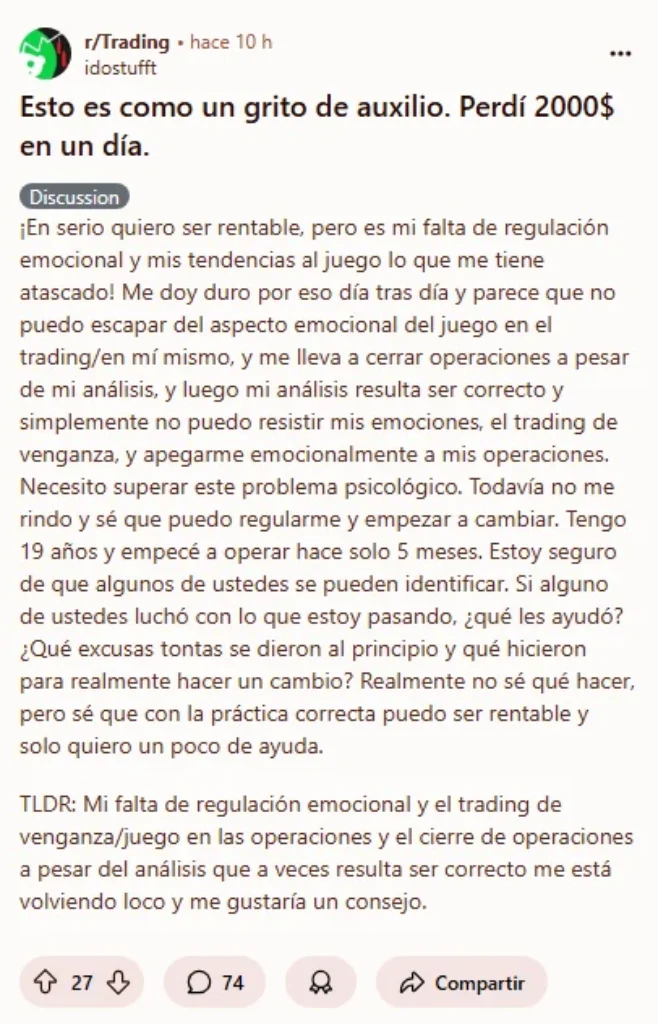
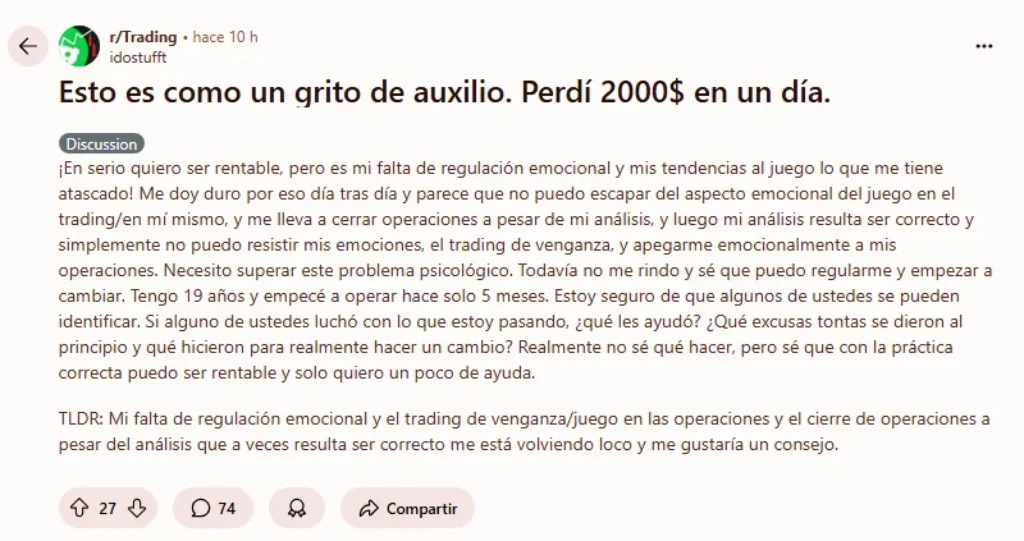
This young man, at such a young age, is a prime example of everything a trader shouldn't do. His trading is essentially driven by emotion; he acts impulsively and lacks guidance. He needs a trading plan and to develop his playbook.
What is a Playbook?
A playbook in the context of trading is similar to the playbook a coach uses in soccer. While a coach has a collection of practiced plays ready to be executed during a game, a trader has a playbook full of winning setups or strategies that they have studied and documented.
Is the playbook the same as the trading plan?
They are not exactly the same, although they are closely related.
📌 Main difference:
- Trading plan → This is your overall framework: it defines your objectives, risk management, capital to use, markets to trade in, trading hours, entry and exit rules, etc. It's like your "constitution" as a trader.
- Playbook → This is your catalog of plays: it compiles your setups and how you execute them. It includes screenshots, examples, the exact conditions for a pattern to be valid, and variations for different scenarios.
In other words: The trading plan tells you what type of game you play, and the playbook tells you which specific plays you will execute and when.
Playbook Features
1. Systematic Collection of Setups
The playbook is an organized collection of strategies that have proven effective. It's not about recording every trade, but rather selecting only the best (A+). This ensures you focus on quality over quantity.
2. Competitive Advantage
Having a playbook gives you a significant competitive advantage. By knowing exactly which setups work best for you and how to execute them, you can operate with greater confidence and precision.
3. Basis for Trust
Confidence in trading comes from familiarity and repetition. By systematically documenting your best setups, you develop a solid foundation for making informed decisions during market hours.
Analogy with football
A team's manager analyzes past matches, studies opponents, and plans the plays his team should execute. He doesn't improvise: every decision is based on observations, statistics, and replays. Similarly, as a trader, you must review your trades, study the market, and refine your setups with continuous reviews and clear notes. This strategic approach not only helps you spot opportunities more accurately but also strengthens your discipline and trading consistency.
Discover the ideal broker, course, or funding account for you with the help of AI.
- 📊 Tailored recommendations, based on your profile
- 🧠 Learn about investing and trading for free
- 🔍 Ideal for beginners and growing traders
Benefits of building your own playbook
Building a personal trading playbook transforms how you approach the market. The benefits go far beyond simply having a list of strategies; it's about creating your own trading edge and committing to continuous improvement.
1. Precise definition of effective setups
A playbook forces you to identify and document only the setups that truly work for you. It's not about copying popular configurations, but about discovering the conditions under which you achieve positive and replicable results.
2. Repetition and refinement
By focusing only on your best setups, you have the opportunity to repeat them over and over, perfecting every detail. This intentional repetition refines your execution and reduces impulsive errors.
3. Data-driven decision making
Detailed transaction records allow for objective pattern analysis. You leave behind hunches or unfounded intuitions: every decision is based on concrete information, reducing uncertainty and fostering confidence.
4. Scientific mindset and discipline
Using a playbook fosters a systematic approach. Every hypothesis about a setup can be tested with backtesting or forward testing before risking real capital. This promotes a culture of discipline, similar to that employed by scientists or high-performance athletes.
The value of the playbook lies not only in what you document, but in the constant process of review, adjustment, and learning.
Steps to create an effective playbook
1. Identifying the setup that works for you
To begin creating your trading playbook, you need to identify the setups that best suit your style and goals. Common examples include:
- Breakout
- Retest
- Capitulation
2. Context Capture
Analyzing the big picture is crucial. You must consider:
- Market catalysts
- General feeling
- Who is caught up in the operation
3. Visual documentation
Use screenshots with clear annotations to document each trade. Be sure to include:
- Tickets
- Departures
- Risk levels
4. Objective rating of each operation
Evaluate each trade objectively and assign it a grade (A+, B, C). Reflect on potential improvements and adjust your strategies accordingly.
5. Constant repetition to refine rules
Repetition is key to perfecting your setups. Keep refining your rules and increase the size of your positions based on concrete data.
These practices will help you build a solid playbook that supports your path to consistency and success in trading.
Tools and methods for organizing your Playbook
Using digital applications like Evernote or Notion is highly recommended for efficiently categorizing setups. These tools allow you to create an organized and accessible database where you can store and review your trading strategies.
It's crucial to build a solid foundation with multiple graphical examples, preferably more than ten. This will help you identify patterns and understand the variables that affect the performance of each setup.
When documenting your operations, carefully analyze the variables that make a setup better or worse. This includes:
- Entry points: Clearly identify where you plan to start the operation.
- Stop loss: Define the level at which you will close the trade to limit losses.
- Profit goals: Set clear goals to take profits.
This level of detail not only makes it easier to repeat and continuously improve your strategies, but also fosters a disciplined, data-driven mindset.
Scientific mindset applied to consistent trading
Adopting a scientific mindset in trading is key to achieving consistency. This involves treating trading as a science, where every hypothesis must be rigorously tested through backtesting or forward testing.
1. Backtesting
It involves testing your setups using historical data to see how they would have performed in the past.
2. Forward Testing
It involves testing your setups in real time with a demo account or a small amount of capital to observe their current performance.
Avoiding trading based on assumptions without empirical evidence is crucial. Every decision should be supported by data confirming a positive expected value before risking real capital. This scientific approach ensures you only trade when the odds are in your favor, minimizing risks and maximizing opportunities.
I recommend you try the Vantage if you're just starting out.
What do users think about Vantage?
- ✔️ Offers MetaTrader 4, MetaTrader 5 and other advanced platforms.
- ✔️ Outstanding customer service and fast order execution.
- ✔️ Requires a high minimum capital to access premium tools.
- ✔️ It is regulated by the FCA (UK) and ASIC (Australia).
- ✔️ Provides analysis and education to improve trader performance.

Another good option would be to start with a funding account.
Personal and professional impact of the Playbook on a trader's career
The experience of a professional trader shows how a well-structured playbook makes all the difference between stagnation and real growth. From the very beginning, the challenge is filtering through the vast amount of information and strategies available. The playbook serves as a guide: documenting only top-performing trades, systematizing lessons learned, and building solid rules are key to evolving into a consistent trader.
The importance of mentorship in trading
Mentoring and training play a fundamental role in this process. Working alongside experts and being surrounded by an active community provides constant feedback, new perspectives on setups, and, above all, discipline. Sharing examples, reviewing results, and adjusting strategies with others accelerates the learning curve and helps avoid costly mistakes.
Distinguished Academy
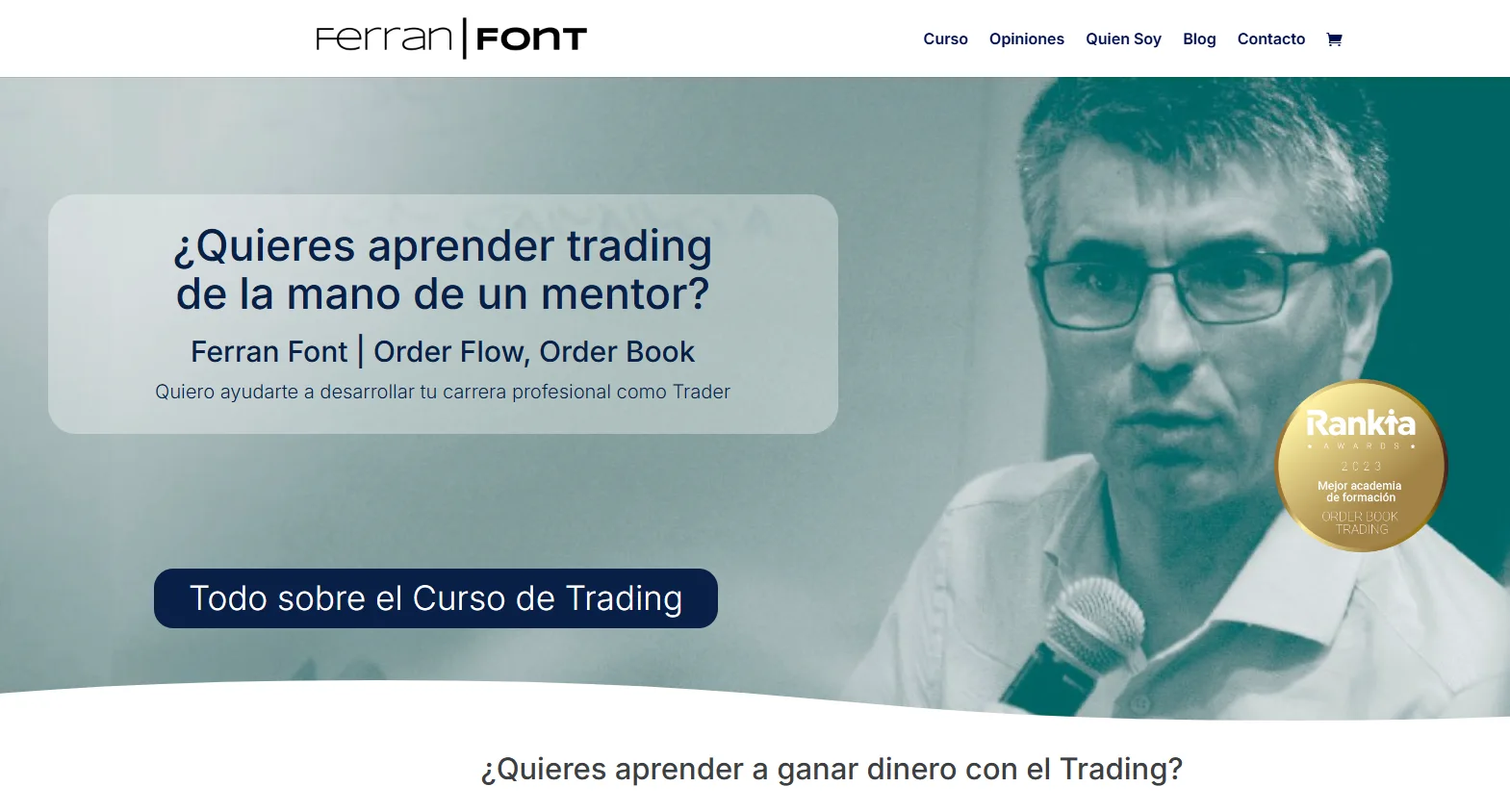
Main advantages of the course offered by Ferran Font:
- Best Academy Rankia Award 2023/24.
- Ferran Font is Wilmott Quantitative Trading Champion (Chicago, ILL) 2014.
- Ferran collaborates frequently with the Madrid Stock Exchange.
- Ferran Font has over 20 years of experience in the financial markets.
You can see all the recommended trading courses here.
Conclusion: The path to consistency through the Playbook
Building a personal playbook isn't just a recommendation; it's the key to success for any trader seeking consistency. Documenting your most effective setups, analyzing results, and refining processes allows you to move beyond improvisation and trade with a real, data-driven edge. Consistency in trading stems from a daily commitment to your own improvement.
For those wondering how to become a better trader and achieve consistency, the first step is clear:
- Start creating your playbook today. Don't wait for "the perfect system." Document what already works and adjust it as you go.
- Define your rules, study each winning setup, and repeat until you master it.
- Make discipline your greatest ally; without it, no playbook has any value.
The difference between an average trader and a consistent one lies in the commitment to their process and the discipline to perfect it every day.
The key to consistency in trading is simple: constant work, honest review, and a willingness to improve. Your path to excellence begins with the act of sitting down to document your progress and ends only when you've reached your desired level. Choose to take that first step today; your future self will thank you.

My name is Norberto. I've been investing and trading for over a decade. I'm also the author of the trading course Experiencia Topstep. If you want to learn how to invest and have any questions, feel free to contact me.
You might also be interested in
HOW TO START INVESTING IN THE STOCK MARKET?

BITCOIN VS GOLD: WHERE TO INVEST FOR THE LONG TERM?
Discover the key differences between investing in gold and Bitcoin.

COMPLETE GUIDE: BITCOIN FOR BEGINNERS
Learn how to invest in Bitcoin safely and profitably.