
What is the level of financial literacy in the population?
Financial literacy is essential for personal and social development. On Financial Literacy Day , the level of financial knowledge among Spaniards was analyzed , revealing that there is still a long way to go to improve this situation.
To write this article, I will use as my starting point the latest financial literacy conducted by the Bank of Spain . This survey aims to establish the average level of financial knowledge among Spanish citizens.
The importance of financial education
Financial education not only helps individuals manage their money better, but also contributes to the well-being of society as a whole.
A well-informed population tends to make better decisions, which translates into increased savings and better investment choices (and definitely better voting, which is no small detail).
The 3 questions from the Bank of Spain survey
These three questions form the basis of the financial literacy test that the Bank of Spain conducts every five years among the population:
- The first one, about inflation: Five siblings receive a gift of 1,000 euros to share. If they had to wait a year to receive their share and inflation that year was 1%, after that time, when they receive the money, could they buy more than they can today, the same amount, or less?
- The second question concerns compound interest: If you deposit €100 into an account with a fixed annual interest rate of 2%, with no fees or taxes, how much money will you have after five years, once the interest has been paid? More than €110, less than €110, or exactly €110?
- The third, regarding risk: Is the statement 'it is generally possible to reduce the risk of investing in the stock market by buying a wide variety of shares' true or false?
Analysis of the results
The survey results indicate that the level of financial literacy in Spain is worrying. Barely 19% of the population is able to pass the test without errors.
Although some percentages are encouraging, the reality is that a large part of the population does not understand basic concepts that are fundamental to good financial management.
Most affected population groups
The data shows that the youngest and oldest groups are the ones with the greatest deficiencies in financial education.
One positive aspect of the results is that both young people and older adults have improved their financial literacy, at least slightly, compared to the results obtained five years ago. Seventeen percent of both groups were able to answer all three questions, compared to 13% five years ago (better than nothing).
The survey also asked about ownership of savings products. The results highlight the findings of young people: 12% of them reported owning cryptocurrencies, compared to 5% of the population as a whole.
It's always surprised me that someone who would never invest in stocks, much less in an investment fund, is so quick to buy cryptocurrencies. Mind you, I own cryptocurrencies, but even so, these people still surprise me. The fact that they're mostly young explains it to some extent.
What social media is saying about financial education in Spain
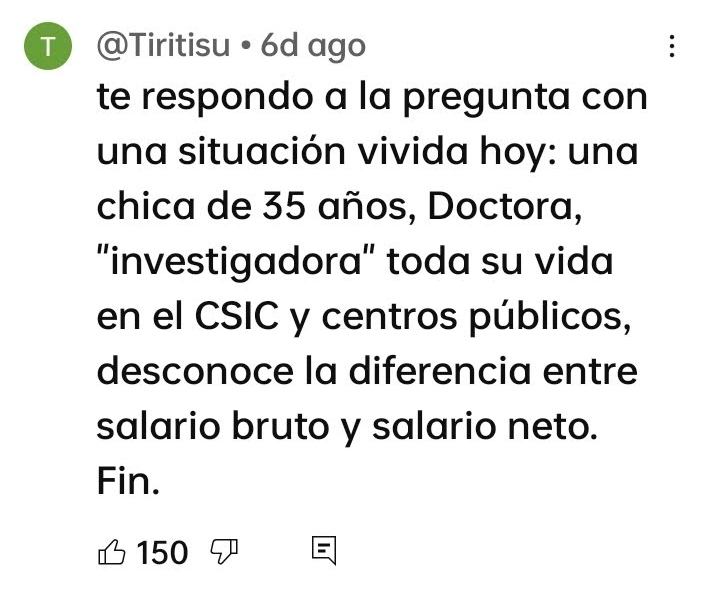

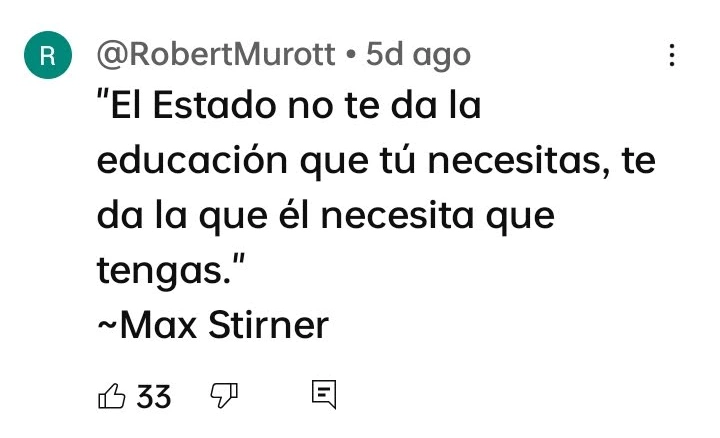

The need to improve financial education
It is crucial that steps be taken to improve financial literacy in Spain (and in many other countries), especially among young people and the elderly. Without adequate knowledge, young people will be unable to build solid long-term wealth, and the elderly risk losing what they have accumulated throughout their lives.
Finance in today's world: What you need to know
Unconventional monetary policy: What is it and why does it affect me?
Unconventional monetary policy refers to emergency measures implemented during times of crisis. However, when these measures are maintained for years, they cease to be emergency measures and become the norm. This has led to an increase in the money supply, which in turn has generated inflation.
Inflation and its impact
Inflation is a phenomenon that affects both assets and liabilities. When the money supply increases, the value of money decreases, meaning that people can buy less with the same amount of money.
Who benefits from inflation? Only governments. As inflation rises, government debt is eroded, which may seem beneficial in the short term, but in the long term it affects citizens' purchasing power.
It's clear the government isn't interested in your financial future, and that's why it's up to you to think about it.
Differences between saving and investing
Definition of savings
Saving is simply setting aside a portion of our money to use later. It's like having a financial cushion that helps us cope with unexpected expenses or achieve short-term goals. It's important to be clear about what we're saving for.
Definition of investment
Investing, on the other hand, is putting that money to work so it can grow. This means we're willing to take some risk in the hope of earning more money in the future. Instead of just saving, we want our money to generate returns.
Smart strategies for saving
The truth is, the foundation of everything is saving. Without savings, it's impossible to invest, so it's important that you start saving, even if it's just a little.
The 50/30/20 Rule
One of the best ways to organize your finances is to follow the 50/30/20 rule. This helps you have clear control over your spending and savings. Here's how it works:
- 50% for basic needs (rent, food, services).
- 30% for treats and leisure (outings, clothes, trips).
- 20% to save money.
Smart investment strategies
Investment diversification
When I think about investing, the idea of not putting all your eggs in one basket always comes to mind. Diversification is key. Here are some options:
- Actions from different sectors (technology, health, energy).
- Investment funds or ETFs that replicate indices (What is an ETF?).
- Real estate investments (there are other types of investments that are not so conventional and do not require large sums, for example I invest in whiskeys).


Investing is a long-term game
Investing isn't a game of chance, nor is it about getting rich quick. It's more of a marathon, not a sprint. That's why I like to think long-term. Here are some tips:
- Start with small amounts and gradually increase over time.
- Stay calm during market downturns; it's normal.
- Review your portfolio at least once a year to adjust what is necessary.
The simplest way to start investing is to opt for an ETF or indexed investment fund (you can see the differences between ETFs and Index Funds here ) by making regular contributions.
Of course, you can do the same thing by buying stocks, but the reason I recommend starting with ETFs is that they are inherently much less volatile than stocks. This is because an ETF is, generally speaking, a group of stocks.
The ETF that tracks the S&P 500 depends on the performance of the 500 largest US companies. In other words, if you buy an ETF that tracks the S&P 500, you're buying a piece of the 500 largest companies in the American economy. This greatly minimizes your risk.
An index fund works the same way, but while ETFs have all kinds (there are ETFs for Chinese stocks, technology ETFs, health and biotechnology ETFs, ETFs for companies in emerging countries, semiconductor ETFs, real estate ETFs, etc.), investment funds do not show as much variety and diversification.
Trading ETFs is very simple, and you definitely don't need an investment course to buy one. You can buy ETFs through your broker with just two clicks.
Here are my favorite brokers for long-term investing.

XTB FEATURED BROKER


eToro RECOMMENDED
The only thing you should keep in mind when investing in ETFs is that this is a long-term investment. Therefore, I recommend making regular contributions. Your ETF portfolio will be with you for many years.
If you want to learn more about ETFs, here are some articles I suggest you read:
- The 5 best ETFs to invest in: Discover which ETFs are the most outstanding right now and how they can help you diversify your portfolio.
- Best opportunities in ETFs: An analysis of the most promising trends in the ETF market and how to take advantage of them.
- Learn to invest from scratch: A practical guide for those who want to enter the world of investing in a simple and effective way.
These articles will help you better understand the world of ETFs and how they can fit into your investment strategy.
Common mistakes when saving and investing
Not having a plan
Not having a plan is one of the most common mistakes. If you don't know what you're saving for, it's easy to lose motivation. Here are some things to consider:
- Define specific goals (such as a trip or an emergency fund).
- Set a deadline for achieving those goals.
- Review and adjust the plan regularly.
Ignoring inflation
Another common mistake is not considering inflation. If you simply save your money without investing it, its value can decrease over time. For example, if you save €100 today, in five years you might only be able to buy what you could buy today with €80. It's important to:
- Learn how inflation affects your savings.
- Consider investment options that outperform inflation.
- Review your savings every year to make sure they don't lose value.
Not diversifying investments
Failing to diversify is a big mistake. Here are some ways to diversify:
- Invest in different types of assets (stocks, bonds, ETFs).
- Don't put everything into a single company or sector.
- Review and adjust your investment portfolio regularly.
Conclusion:
The responsibility for improving financial literacy rests not only with society, but also with each individual. It is essential that we all seek training and education in this area to ensure a more solid and secure financial future.
Keep in mind that saving is important, but it's crucial that you start investing, not just for yourself, but for your family. If you're young, even better, and believe me, you don't need to be a genius to do it. You just need discipline and to let time and compound interest do their work.
And if all this hasn't convinced you yet, perhaps this inspiring article will, which tells the story of an unknown janitor who amassed a fortune of 8 million dollars by simply doing the same thing I'm recommending here.

My name is Norberto. I've been investing and trading for over a decade. I'm also the author of the trading course Experiencia Topstep. If you want to learn how to invest and have any questions, feel free to contact me.
You might also be interested in