
The market doesn't wait: those who invested in the S&P 500 won
Over the past five years (2019–2024), the S&P 500 index has experienced cumulative growth of approximately 93.5%, which equates to an annualized return of close to 14.1%.
📈 Annual return of the S&P 500 (2019–2024)
- 2019: +28.88%
- 2020: +16.26%
- 2021: +26.89%
- 2022: −19.44%
- 2023: +24.23%
- 2024: +23.31%
These figures include the reinvestment of dividends, reflecting the total return of the index.
💡 What does this mean for you?
If you had invested $10,000 in the S&P 500 at the beginning of 2019 and held that investment until the end of 2024, your capital would have grown to approximately $19,350, not including taxes or fees.
Discover the ideal broker, course, or funding account for you with the help of AI.
- 📊 Tailored recommendations, based on your profile
- 🧠 Learn about investing and trading for free
- 🔍 Ideal for beginners and growing traders
The first step to investing safely: choosing a regulated broker
Before you start investing, you need a platform to connect your money to the market. But not just any option will do: choosing a regulated broker, as this is the only way to trade with the peace of mind that your money is protected by law.
Don't know where to start?
Speak with a MEXEM expert , they will guide you step by step through the process of opening your account.

MEXEM assistance in Spanish:
- 📞 910 602 762
📧 asistencia@mexem.com
🔒 Your money is protected by the strictest European regulations (CNMV, CySEC, Bafin, among others).
MEXEM assistance in Spanish:
- 📞 910 602 762
📧 asistencia@mexem.com

The easiest way to start investing: ETFs
ETFs are the best option for those starting to invest. An ETF (exchange-traded fund) is like a basket of investments that you can buy and sell like a stock. This basket can contain many things: company shares, bonds, commodities, and more. The advantage is that by buying a single ETF, you're investing in many things at once, which reduces risk and allows you to get started easily, without having to choose each stock individually.
If you're just starting out and don't want to overcomplicate things, I recommend a simple strategy like making recurring deposits into your brokerage (this is called dollar-cost averaging) and investing in well-established and secure ETFs (e.g., the ETF of the best American technology companies, the ETF of the top 500 US companies, or the ETF of the best companies in the world). The truth is, you don't need much more than this to start investing.
The importance of investing in the current climate cannot be underestimated. In an era where economic crises seem to be recurring events, finding efficient ways to protect and grow personal wealth is crucial.
Saving money in a savings account isn't investing; it's letting your money slowly lose value. Investing is what people who understand how money works do. a reason Bill Gates and other wealthy individuals have a large portion of their wealth in the stock market. If they, who don't need to, do it, shouldn't you?
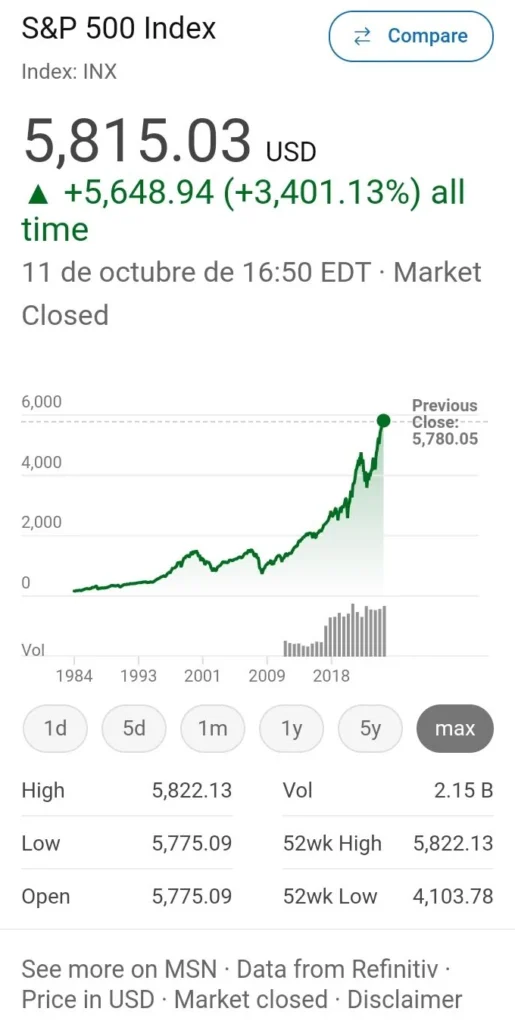
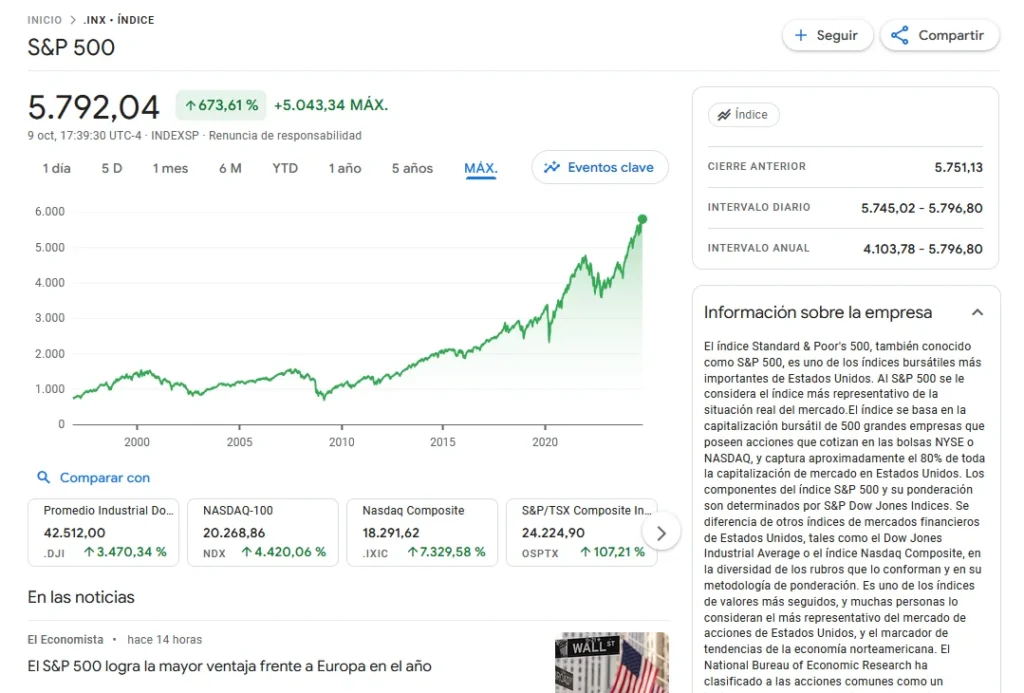
You probably know the story of Ronald Read, a janitor from the United States who amassed a fortune of over $8 million investing in the stock market. Ronald's secret was simple: pure consistency. Something we can all do. A reliable broker, a simple strategy, and consistency.
Today we have far better tools than Ronald had to start investing. And we also know which strategies work best. So what's stopping you? Don't know where to begin? We need to fix that.
Turn your money into opportunities. Start your investment plan today
But let's take it one step at a time. In this comprehensive guide to learning how to invest, I'll tell you everything you need to know.
📈 Step 1: Define your financial goals
Before investing, it is essential to have clarity about your goals:
- Are you saving for retirement?
- Do you want to buy a house?
- Looking to generate additional income?
Setting clear goals will help you choose the right investment strategies. I recommend starting with an investment plan (it's the easiest and safest way).
🧠 Step 2: Know your investor profile
Identify your risk tolerance:
- Conservative: You prefer security and stable returns.
- Moderate: You accept a certain level of risk for higher returns.
- Aggressive: You seek high returns and are willing to take significant risks.
Understanding your profile will allow you to select the investments that best suit you. Keep in mind that higher returns usually come with higher risk. A very aggressive investor profile is only recommended for someone who has previously completed an investment or trading course (Would you like to learn from a trading champion?).
How to choose a good trading course (and avoid the snake oil salesmen)
💰 Step 3: Choose the right investment asset
There are several investment options:
- Shares: Participation in companies.
- Bonds: Loans to governments or companies.
- Investment funds: Automatic diversification.
- ETFs: Exchange-traded funds that replicate indices.
Choose the asset that best aligns with your goals and risk profile. ETFs are the best option if you're just starting out. With ETFs, you have many options to choose from. It's common to choose an ETF that tracks the best US companies, or one that tracks the best technology companies, one with the best companies in the world, or one that's indexed to the price of gold. And of course, you can combine these ETFs. As you can see, you don't have to be a genius to invest.
🛠️ Step 4: Open an account with a reliable broker
To start investing, you need an account with a broker that offers:
- Appropriate regulation
- Low commissions
- Easy-to-use platform
- Customer service in your language
📊 Step 5: Diversify your portfolio
Don't put all your eggs in one basket. Diversifying your investments reduces risk and can improve your long-term returns. With an investment plan, you can include gold, top US companies, bonds, and more in your portfolio. With proper diversification, the risk you ultimately take is minimal.
📅 Step 6: Invest regularly
Investing is not a one-time event, but an ongoing process. Establish a plan to invest regularly, taking advantage of compound interest and reducing the impact of market volatility.
One of the simplest and most effective strategies you can adopt is dollar-cost averaging (DCA). DCA means you won't invest all your money at once, but rather through small, recurring contributions. It's similar to what Ronald Read (remember I mentioned him at the beginning of this guide and how he made $8 million investing in stocks?).
📈 Step 7: Monitor and adjust your strategy
Review your investments regularly and adjust your strategy as your goals or market conditions change. Flexibility is key to long-term success. For example, if your investment plan is 80% stocks, you can lower that proportion and add gold if you notice volatility or uncertainty in the markets.
Common mistakes when starting to invest
Starting to invest can be exciting, but it's also fraught with common mistakes many beginners make. Identifying these mistakes is crucial to avoiding unnecessary losses and frustration.
1. Lack of knowledge
Many new investors venture into the financial market without understanding its basics. It's vital to educate yourself on how different financial instruments work before investing real money.
2. Influence of social networks
Platforms like Instagram and TikTok are rife with unverified financial advice. It's easy to fall into common traps promoted by people promising quick profits. It's essential to verify information and follow reliable sources.
3. Unrealistic expectations
Believing that exorbitant returns can be obtained quickly is a common mistake. Investing is a process that requires patience, analysis, and a long-term strategy.
The value of continuous learning in investing cannot be underestimated. Learning from every experience, both positive and negative, strengthens your ability to make informed decisions. As the saying goes, "practice makes perfect." Training your mind to cope with market fluctuations will better prepare you for the future.
Being aware of these mistakes and working to avoid them is an essential step on your path to becoming a successful investor.
Direct access to global markets with competitive rates
- ✔️ Trades over 135 markets in stocks, ETFs, options, futures and more.
- ✔️ Professional platform with advanced tools for active traders.
- ✔️ Customer service in Spanish and personalized support in Europe and LATAM.
- ✔️ Broker regulated by CySEC and with European protection standards.

Conclusion:
Investing is a path full of learning and challenges where patience and constant learning are your best allies.
Novice investors should focus on the long term and keep things simple. There are two well-known strategies for doing this: 'buy the dip' and 'dollar-cost averaging' (DCA). My recommendation is to start with ETFs through investment plans using DCA. Your children, or even your future self, will thank you.

My name is Norberto. I've been investing and trading for over a decade. I'm also the author of the trading course Experiencia Topstep. If you want to learn how to invest and have any questions, feel free to contact me.
You might also be interested in
HOW TO START INVESTING IN THE STOCK MARKET?

HOW TO GENERATE PASSIVE INCOME THROUGH INVESTMENTS
How to generate passive income through stock investments,…

WHAT IS DCA OR DOLLAR COST AVERAGING?
The simplest strategy to get you started investing.