
 Norberto Viale
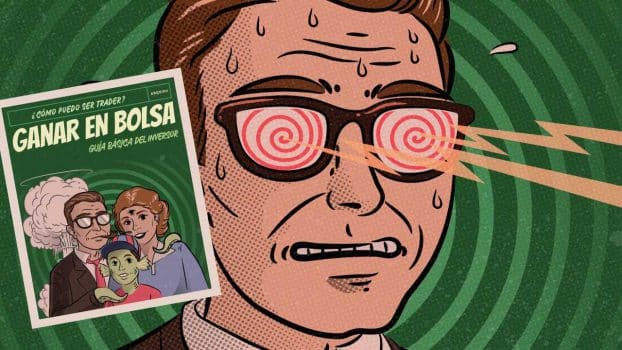
The first thing is to get trained
'What is the best trading course?', I get asked this question very often.
Unfortunately, this isn't a question I can easily answer. I can tell you which stock market and trading courses I've enjoyed the most, which I've listed in my ranking of stock market courses (from best to worst), but I can't tell you which of these courses is ideal for you, and that's mainly because every trader is unique.
The best stock market course for you will be the one that suits your personality and lifestyle. Of course, this doesn't mean that just any stock market course will do; in fact, the market is full of mediocre, bad, or even overpriced courses. But there are also some very good courses. The problem arises when we have to choose between two or three very good ones.
Only you have the answer to this question. Do you have time for day trading or do you prefer swing trading? Are you interested in trading stocks or do you prefer the Forex market? Order Flow or Price Action? The options are many, as many as there are types of investors.
Depending on the type of trader or investor you aspire to be, you'll need to consider different training options. A simple way to begin defining your trading style is to think about whether you're interested in day trading or medium- to long-term trading.
Recommended courses for investing in the stock market:
- Best stock market courses for investing in shares
- Best courses for Forex
- Best stock market courses for trading futures
How to make money with trading?
The simplest answer is: 'Buy low and sell high'. But when people ask me this question, what they're really asking is about a winning strategy that guarantees consistency.
And while there are no guarantees, that doesn't mean there aren't ways to profit from trading. In fact, there isn't just one way to profit from trading. I can share my trading strategies, but just because they work for me, or rather, just because I'm comfortable with them, doesn't mean they'll work for you. Every trader is unique.
When I trade intraday, I use E-Mini Micro Futures or funds from trading firms. My maximum risk is $30 or $40 per trade, and I usually take profits by making $60 or $80 (sometimes a little more).
This may be very little for many traders; clearly I could trade in another market and earn $600 or $800 on each trade with exactly the same strategy, but this would mean risking $300 or $400 per trade and my stomach isn't ready for that yet.
I also try to combine my day trading with other medium- to long-term trades, usually with stocks. Day trading is demanding, and I can't always dedicate myself to it. Family and work often prevent me from doing so.
Therefore, I can assure you that a 'winning strategy' will depend on each trader. What you learn in stock market courses will be useful as long as you can adapt what you learn to your own reality as a trader.
Your risk tolerance, available capital, time, and often even the emotions involved in trading will determine your strategy. Keep in mind that each market has its own unique characteristics.
You can invest in futures, forex, options, ETFs, stocks, CFDs, and more. You can do it long-term, intraday, swing trading, or a combination of these investment methods. You can trade manually or using algorithmic trading. The truth is, there's no shortage of investment options to make money through trading; you just have to find the one that's right for you.
How profitable is trading?
Trading can be very profitable. However, you should know that if you want to earn 10, you'll have to risk 10. Well, it's not quite that simple. What I really mean is that, in general, it's not wise to expect to earn millions by risking pennies.
Profitability is usually proportional to what is risked or invested.
Some people might risk $200 per trade and end up with $1,000 or $2,000 by the end of the month; that's feasible. What's not feasible is risking $200 if your account only has $1,000. Believe me, your heart wouldn't withstand that. The recommendation is to risk 2-3% of your account per trade.
One thing to keep in mind is that day trading is usually difficult to sustain over time (at least that's been my experience). Often, market volatility changes or personal factors end up affecting your performance; it's at those times that you need to take a break.
For this reason, I recommend day trading only with a small portion of your investment capital (and preferably with funding companies like Topstep). Day trading is clearly more profitable (if done correctly), but also much riskier and more difficult. Combining it with swing trading or passive management (long-term investing with indices) is ideal.
Investing long-term is a different story, and returns usually range between 5% and 20%, assuming you make a profit, as you can also lose between 5% and 20% (think of Josef Ajram's SICAV if you don't believe me).
Here's an example of the annualized returns of mixed funds over the last few years, where they're closer to 5% than 20%. As you can imagine, a 5% return isn't anything spectacular. The long term is easier, but you need a substantial account to make a significant difference. Even so, I still recommend it. Ideally, you should diversify, combining day trading with medium- and long-term strategies (How long will it take me to become a profitable trader?).
What does it take to be a good trader?
On this point, I can give a definitive answer. You need discipline. Every good trader has a strategy they stick to without letting emotions interfere.
If you trade under stress and your emotions lead you to revenge trading or to suffer excessive losses, it is very possible that this is because the size of your positions is too large.
A little ambition is good, but uncontrolled ambition is generally not a trader's best friend (neither ambition nor anxiety). This is why I usually recommend starting to trade through a funded trading account, such as those offered by companies like Topstep or Earn2Trade, among others.
What is the best platform for trading?
Once again, I must mention my preferences. When trading with funded accounts or Micro Futures I use NinjaTrader. It's a platform that offers me a lot of flexibility and that I feel very comfortable using. Other platforms I really like are TradingView and ProRealTime.
Many stockbrokers offer MetaTrader, which is quite user-friendly and intuitive, and is generally the platform of choice for Forex trading. The truth is, the platform is just one detail; depending on your style, you might prefer one or the other, but it won't make a difference in your trading.
The best approach is not to commit to any one platform and try several until you find one you're comfortable with. Even the platforms offered by certain brokers like XTB or eToro (the latter being an extremely simple platform ideal for beginners) are usually very good if you know how to use them.
How to get started in trading?
It's clear that the best way to start is by getting trained. Almost everyone who's gotten into trading did so because at some point they bought stocks thinking it was easy. The truth is, if you do this without a method, sooner or later you'll end up losing money. That's when looking for a stock market course starts to make sense.
I don't think I need to tell you that the best thing to do would be to look for a stock market course before you lose money. Without a system, you'll hardly be able to achieve consistency in your trading.
The truth is, trading isn't something you learn in a weekend and it usually requires a lot of time and effort. Formal training isn't an option for anyone who wants to make trading a part of their life.
You can start with a free stock market course to explore the different investment options available and then choose a course that develops the investment strategy that best suits you.
Practicing with one of the many free platforms on the market and familiarizing yourself with how they work will also be necessary and is one of the first things you should do.
Is trading for me?
Another question I can't answer. Is football for me? Will I succeed playing football? There are people who succeed and make a living from football. There's Messi and Cristiano (I mention these two players because they're among the few I know).
Messi probably didn't know he would become a football star if he had been asked about his future at 15. What he did know was that it was possible and that he wanted to try.
Trading is the same. You'll never know if it's for you unless you try. However, there are some variables you should consider before giving it a go.
Your boss asks for your fifth report of the day, and you, fed up with everything, say: 'OK, I quit. Starting tomorrow, I'm going to be a trader.' This is not the way to get started in trading.
Without significant capital to give you peace of mind when trading, or a source of income independent of trading, it will be very difficult to start without the emotional variable taking over.
Trying to earn a living from trading right away is a mistake; trading takes time. It's no different from any other profession or starting a business. And if we're talking specifically about day trading, ideally you should combine it with passive investing or swing trading.
As usual, I'm speaking from my own experience, and you probably know other stories, but when I tried to live exclusively from trading, the emotional pressure I experienced overwhelmed me.
Trading is not as easy as taking a course and starting to make money; the emotional variable is often difficult for most people to control (sometimes even when investing long-term). It has taken me years (but I am a particularly anxious and emotional person; perhaps your case is different).
Again, you won't know if this is for you until you try it. I eventually found my formula. What has worked for me is having a job separate from trading and supplementing it with my trading. Risking little, even if it means earning little, and combining day trading, which is what I enjoy, with other types of investments.
So, is football for me? I have to try.
TRADING AND STOCK MARKET INVESTMENT COURSES: Day Trading vs. Short-Medium Term
How to Start Investing in the Stock Market?

Day Trading

Swing Trading








Good morning! I'm interested in taking a course, but I think that before starting a course it would be interesting to read a book, to learn at least the jargon and get a general idea of what it all sounds like.
What books would you recommend?
Thank you
Hi Monica,
One of the trading books I enjoyed most when I was starting out, and one I always recommend, is 'The Wyckoff Method' by Enrique Valdecantos. It's a very easy read that explains market dynamics without resorting to technical jargon. I think you'd do well to start by reading that book 😉
Greetings
Thank you so much! You're awesome! When I feel ready for the course (I was thinking about Ferran Font's) I'll ask you for the discount coupon!
Hi Monica,
Thank you for reading. I hope you enjoy the book. And whenever you want to talk about trading, you know I'm here 😉
Greetings
I'm interested in learning more about the in-depth aspects of trading
Hello Domingo,
Tell me how I can help you. I'll gladly try.
Greetings