
Before we begin, one quick note. This is a selection of regulated brokers with an international presence, who typically offer support in Spanish, well-known platforms (MT4/MT5, cTrader, or WebTrader), and terms that are generally a good fit for Forex and CFD traders.
But this doesn't mean that trading is "easy" or that the broker does the work for you.
That said, let's get to the useful stuff: a quick guide to comparing commissions, platforms and conditions, and then the updated list of recommended brokers (who is best with each one).
How this list was made (and why it matters)
for over 10 years. This isn't a list compiled based on popularity or what sounds good. Nor is it a list of what I personally like. What I look for: regulation, cost transparency, execution quality, platforms, instrument variety, and genuine support for Spanish-speaking clients.
Quick guide: what to buy in 5 minutes (without going crazy)
1) Actual regulation (and in which entity you open an account)
It's not enough to simply say "we're regulated." What matters is who you're registered with and in what jurisdiction . For many traders, seeing regulators like the FCA (UK) or ASIC (Australia) is a good starting point. Other brokers also operate with offshore entities that offer different terms (leverage, protections, etc.).
2) Costs: spread, commission, swaps and “what you don’t see”
- Standard account: usually comes with no commission, but with a wider spread.
- RAW/ECN: very low spread (sometimes "from 0.0"), and a commission per lot.
Be wary of the phrase "spreads from 0.0 pips." It might be true, but that doesn't mean it's the typical spread at all times. Also, look at the average spreadand check swaps if you leave positions open.
3) Execution (this is key if you do scalping or robots)
If you do fast day trading, scalping, or algorithmic trading, you want:
- fast execution
- few or no requotes
- ECN model or access to solid liquidity (account-dependent)
4) Platforms (and if they are good in Spanish)
For many, MT4/MT5 remain the standard, especially if you use Expert Advisors (EAs). Others prefer cTrader or TradingView. And if you prefer a "cash in, cash out" approach without much configuration, a simple web platform might be better.
5) Instruments: Forex, indices, stocks, crypto, futures
Some brokers offer over 1,000 instruments across Forex, stocks, and cryptocurrencies, while others are more "purist" and focus on FX and indices. There's no single "best" broker. It depends on what you trade.
Updated list of recommended brokers
Below you'll find the brokers and the type of trader they're typically best suited for. Where applicable, you'll see mentions of spreads from 0.0, ECN execution, MetaTrader in Spanish, Spanish-speaking support, daily education, and bonuses (when available, as these vary by region).
1) Pepperstone (the most recommended, the one usually chosen by traders)
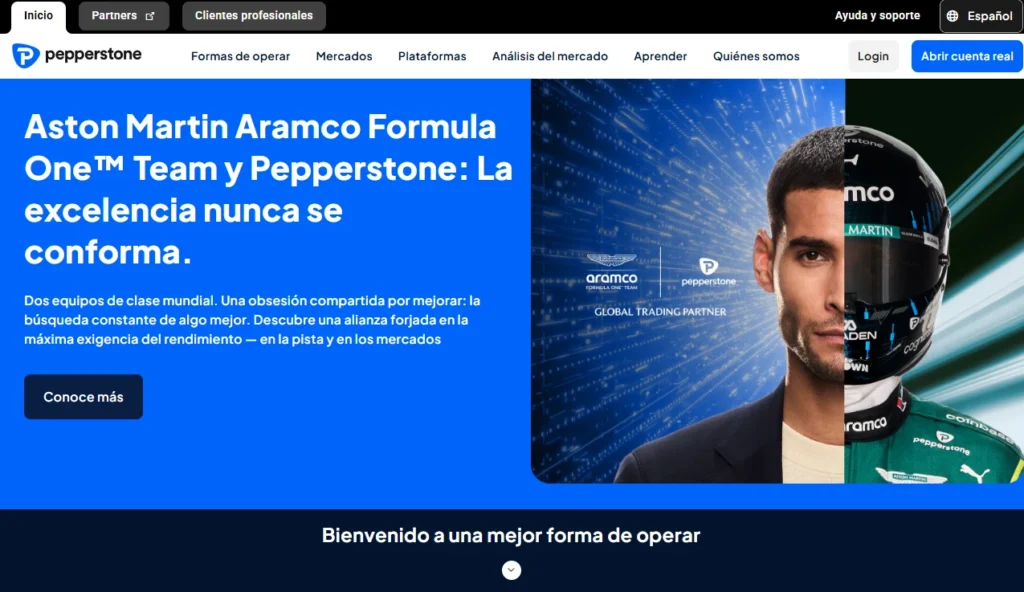
- Read reviews and the full Pepperstone review
- More information: www.pepperstone.com
Best broker for: scalping, serious day trading, and algorithmic trading.
If I had to sum up Pepperstone in one sentence, it would be: execution, execution, and execution. It's an ECN broker widely used by traders who don't want frills and do want orders filled quickly and under favorable conditions.
What usually stands out:
- Tight spreads (on Razor/RAW type accounts, depending on region)
- Fast execution, highly sought after for scalping
- MT4/MT5, cTrader, and in some regions integration with TradingView
- Strong regulation in several entities (e.g., FCA/ASIC, depending on the client's country)
- It usually has an affordable minimum deposit (varies by region)
Things to keep in mind:
- The availability of using TradingView or certain conditions varies depending on your country and the entity you are assigned to (I use it with MetaTrader).
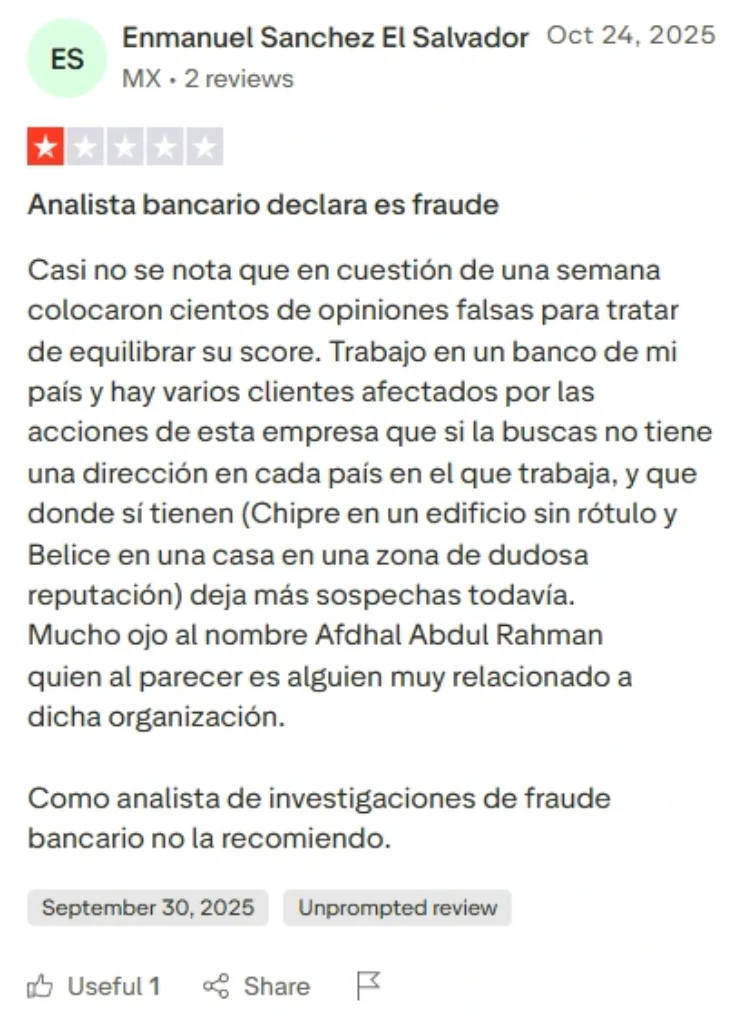
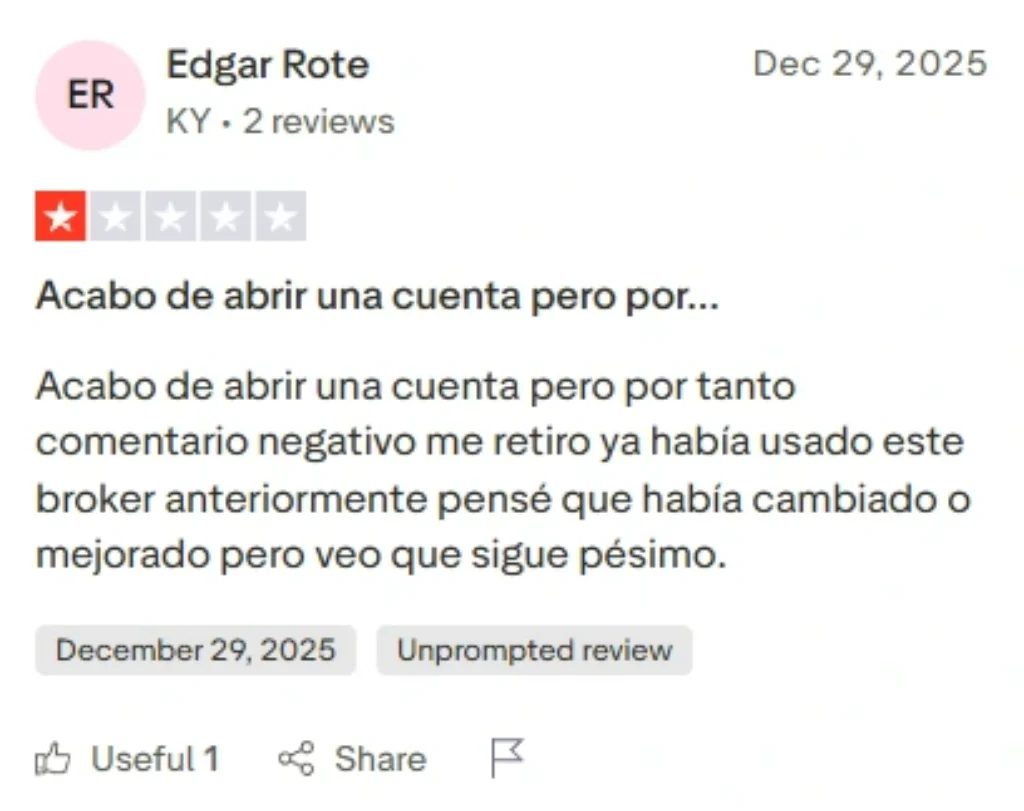
2) XM (the worst on the list)
It's best to avoid it: the recommendation here is not to use this broker.
XM was a go-to platform for countless people starting out in Forex. Not so much for being the "cheapest," but for its ecosystem: education, webinars, resources, and a very user-friendly experience for Spanish speakers.
Unfortunately, all that has changed drastically. I'm only including it on this list because there are still people who believe in corporate marketing.
As I said before, what I recommend in this case is not to use it.
The traders' opinions say it all:

3) Eightcap
Best for: trading Forex and crypto with TradingView (when available) and good educational support.
Eightcap has become popular due to its practical approach. Competitive pricing, solid experience with MT4/MT5, and for many, its integration with TradingView is the key selling point, as it offers a very convenient way to analyze and manage workflows.
The most relevant points:
- regulated (including ASIC, depending on the entity)
- Competitive pricing on major pairs
- MT4/MT5 and (depending on the region) TradingView
- Good educational system, useful if you're still "building your method"
Things to keep in mind:
- Maximum leverage and product offerings vary by regulation and region
4) BlackBull Markets
Best for: high-volume ECN traders .
BlackBull Markets often comes up in conversations among people who trade larger volumes or who are looking for an ECN environment with solid execution. The focus is quite clear: speed, liquidity, and competitive conditions for frequent traders.
Strengths:
- ECN approach, rapid execution
- competitive for high-volume profiles
- MT4/MT5, mobile app
- presence in multiple jurisdictions and service for international clients
Things to keep in mind:
- As always, check the specific entity, lot fees, and exact account type before funding
Customer reviews:


5) FP Markets
Best for: combining Forex and CFDs with a highly competitive ECN model.
FP Markets is generally well-liked for its balance. It's not just about "low spreads," but also about overall consistency: platforms, instruments, market analysis, and RAW/ECN accounts that are a good fit for active traders.
Highlights:
- strong regulation (e.g., ASIC/CySEC, depending on the entity)
- ECN/RAW accounts with very low spreads (sometimes "from 0.0")
- MT4/MT5 and in some regions IRESS (more stock-oriented, depending on availability)
- minimum deposit usually available
- frequent market analysis and content
Things to keep in mind:
- IRESS and some instruments may be regional. Check from your country.
Customer reviews


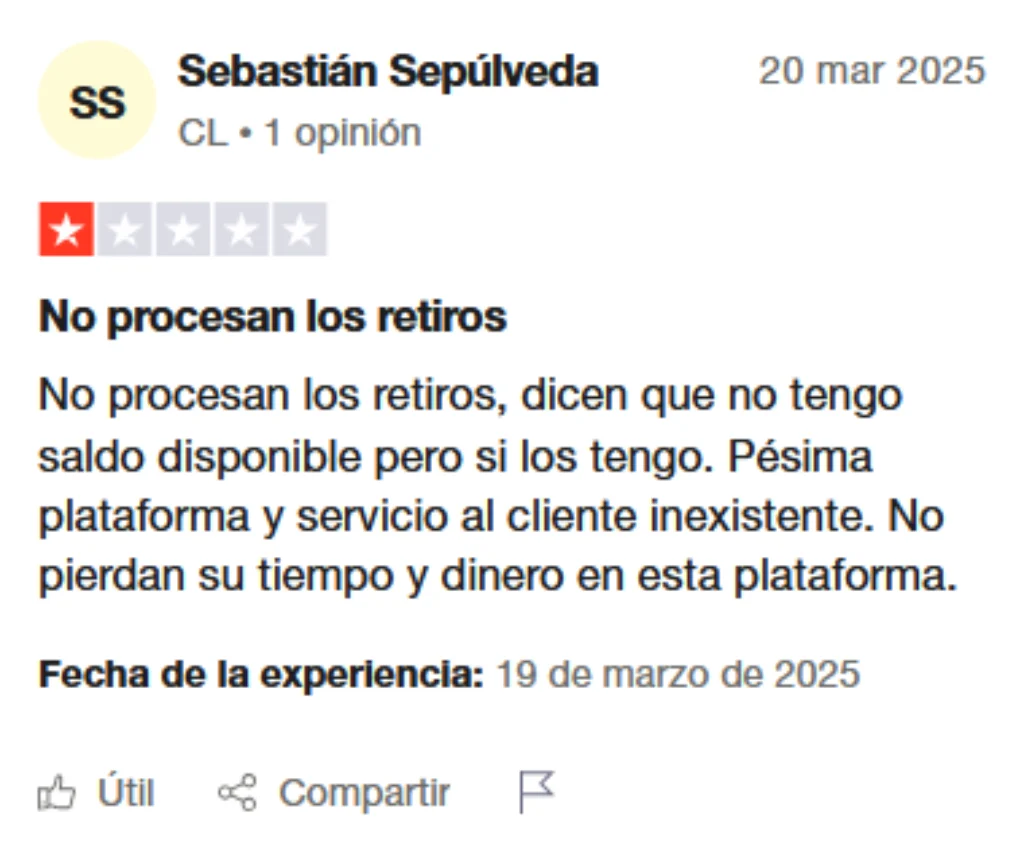
6) AvaTrade (I don't like it)
Best for: trading from web and mobile with copy trading options .
AvaTrade is a typical choice for those who want a smooth, less technical experience with a well-designed web/app platform and social tools. For users who don't want to spend hours configuring MT4, it's often a reasonable entry point.
Pros:
- globally regulated broker with an international presence
- WebTrader, AvaTradeGO, and also MT4/MT5
- Demo available with real-time data (subject to conditions)
- integrated copy trading / social trading options
- Spanish support in many regions
Things to keep in mind:
- Their spread/conditions structure may not be as aggressive as that of pure ECN brokers, depending on the account and region
- Many criticisms of customer support and its advisors
- Limited leverage in certain jurisdictions (e.g., in Europe by ESMA)
- many criticisms regarding customer service
- Account managers who pressure you to open positions (and lose them)
- Platform glitches… it's not ideal for scalping or very active trading
- uncompetitive spreads
Reviews of AvaTrade:

7) GO Markets
Best for: diversifying with a single broker and maintaining competitive commissions.
GO Markets is one of those brokers that isn't always "the most famous," but it usually offers a pretty solid execution cost ratio, especially if you trade FX and indices and want a well-equipped MT4/MT5 environment.
The most interesting thing:
- competitive conditions in commissions and execution
- MT4/MT5 and WebTrader
- Additional tools such as plugins or VPS (depending on conditions)
- Sufficient supply for Forex and index strategies
Things to keep in mind:
- It's a lesser-known brand for some, so it's worth reading the fine print about the entity and the applicable protections
8) RoboForex
Best for: automated strategies and asset variety.
RoboForex tends to attract traders who want to try many things. It offers different account types, a variety of instruments (depending on the region), and a fairly clear focus on automated trading.
Pros:
- A good option if your priority is automation and variety
- support for popular platforms (commonly MT4/MT5)
- conditions that may be of interest to those who rotate strategies
Things to keep in mind:
- Carefully review the regulations, entities, and exact conditions for each country (this is especially important here)
9) Plus500
Best for: those who want a simple platform in Spanish and to trade without complications with MT4/MT5.
Plus500 is almost the opposite of the "pro" experience of setting up a MetaTrader with indicators, VPS, EAs, etc. The point here is simplicity. You log in, look at the chart, manage risk, and trade.
What people like:
- Our own intuitive platform, usually available in Spanish
- A very straightforward experience for beginners who prioritize ease of use
- operational without having to "assemble" external tools
Things to keep in mind:
- If you're an algorithmic trader or need a complete MT4/MT5 ecosystem, it might fall short for that profile
- Review the cost structure and spreads of the instrument you trade, because in the end that's what you pay for
10) Fintana
Best for: operating from a browser with analytical tools.
Fintana fits the profile of someone who wants to trade from a web-based platform with good visual support and analytical tools, without turning the setup into an engineering project. If you primarily use a laptop and a web browser, this type of platform becomes quite appealing.
Pros:
- focus on browser-based trading
- integrated analytical tools
- interface designed for frictionless operation (and in Spanish, depending on regional availability)
Things to keep in mind:
- As with any broker, check regulation, entity, costs per instrument, and whether the product you want is available in your country
Special mentions (by region)
Brokers with a real ECN focus and “spreads from 0.0”
In practice, several of the brokers on the list compete here (Pepperstone, FP Markets, BlackBull, GO Markets, Eightcap), but the real difference usually lies in:
- commission per batch
- average spread (not minimum)
- execution quality during high volatility hours
- stability with EAs and VPS
If your strategy depends on getting in and out quickly, this part matters more than any banner.
Bonuses (always regional)
Some brokers offer bonuses in certain regions. In others, they are simply not allowed due to regulations. If a bonus makes you want to make a quick decision, that's a bad sign. First, check the terms and conditions, regulations, and withdrawal procedures. Then consider the bonus.
Quick mental chart: which one to choose according to your style
- I scalp or use robots on MT4/MT5 and I'm obsessed with execution: Pepperstone
- I want to learn with daily Spanish education, and a well-known brand: Pepperstone.
- I want TradingView for Forex and crypto (if applicable in my region): Eightcap
- I trade high volume, ECN style, I need very precise conditions: BlackBull Markets
- I want a balanced ECN for FX and CFDs, with good offerings and analysis: Pepperstone
- I prefer web and mobile, and I'm interested in copy trading: AvaTrade
- I'm looking for competitive commissions and diversification with a regulated broker: GO Markets
- I want to automate and test a variety of assets: RoboForex
- I want a simple platform in Spanish, without complications: Plus500
Final checklist before opening an account (this saves you from silly mistakes)
- Confirm the regulatory entity with which you will open (not just the broker's name).
- Look at average spread + commission, not just “from 0.0”.
- Check swaps if you swing or leave positions open.
- Try the demo and then a small account. Evaluate slippage in news.
- Check if there is real support in Spanish (chat, email, phone, hours)
- Check deposit and withdrawal methods from your country, and typical processing times.
Yes, this is boring. But it's the kind of boring that saves you money.
Conclusion:
This updated list of recommended brokers (or others) is intended for traders who want to quickly compare conditions and choose with a bit more thought.
If I had to give you one final piece of advice, just one. Don't choose the "best" broker. Choose the broker that best suits your trading style, your platform, your schedule, and your risk tolerance.
And please keep this in mind: between 50% and 70% of people lose money trading CFDs. Your advantage isn't the broker. It's your process. Your risk management. And your patience, however unglamorous that may sound. Trading stocks without proper education puts you among the percentage of people who lose.
So, educate yourself, and then choose your broker.
🛡️ Legal notice
The opinions shown are from real users and have been collected from external platforms. Some are presented as screenshots to preserve their original format.
The analysis and comparative assessments are prepared by the author of this article for informational purposes. We recommend always consulting the official terms and conditions on each company's website before making any decisions.

My name is Norberto. I've been investing and trading for over a decade. I'm also the author of the Topstep Experience trading course. If you want to learn how to invest and have any questions, feel free to contact me.
You might also be interested in
HOW TO START INVESTING IN THE STOCK MARKET?

WHAT HAPPENED TO MARCELLO ARRAMBIDE'S DAY TRADING ACADEMY (DTA)
Why is this trading academy no longer being talked about?

WHEN SIZE DOES MATTER: WHY DO TRADERS LOSE?
Why Traders Lose: The #1 Mistake (Size)