Hace años era usual escuchar el nombre ‘Day Trading Academy (DTA)‘ (la escuela de trading de Marcello Arrambide). Aparecía en YouTube, en anuncios, en webinars, o bien en un directo de Instagram con música épica y una promesa medio implícita de libertad financiera.
Y luego pasa lo típico. Un día los ves por todas partes y al siguiente te preguntas…. ¿Y Marcello?
¿Qué pasó? Siguen. Cerraron. Cambiaron de nombre. Era bueno. Era humo. Hay denuncias. Hay alumnos furiosos. Hay gente que dice que le cambió la vida (no conozco ninguna). Y otros que dicen que fue la peor decisión.
¿Qué pasó realmente?
Vamos a ordenar el tema. Con contexto. Con matices. Y también con cosas incómodas, porque si no, esto no sirve.
Aviso rápido. Esto no es un ataque personal a nadie. Es un intento de entender qué fue de Day Trading Academy, qué señales hubo, qué cosas se repiten en este tipo de academias y por qué la gente siempre será víctima de los vendehumo.
La versión corta (para ubicarnos)
Cuando alguien dice “¿qué pasó con Day Trading Academy?”, normalmente está preguntando una de estas cosas:
- Si la academia sigue operando o desapareció.
- Si tuvo problemas legales, denuncias o polémicas.
- Si cambió su modelo, su marketing o su marca.
- Si realmente enseñaban algo útil o era más venta que trading.
- Por qué hay opiniones tan polarizadas.
En la mayoría de casos, lo que “pasa” con este tipo de academias no es un evento único. Es una mezcla de desgaste, cambios de estrategia, presión por captar alumnos, saturación del mercado, quejas, reembolsos, más quejas, conflictos, humo… mucho humo y a veces rebranding.
Vamos por partes.
Qué era Day Trading Academy
Day Trading Academy (DTA) se vendía como una academia de formación para hacer day trading. Enfocada, según su narrativa, en operar en el corto plazo con método, disciplina y un sistema probado (todo humo). Tengo una reseña completa de esta escuela aquí.
Hasta aquí, lo normal. Hay mil academias vendiendo humo como esta.
Lo particular era el estilo: mucho énfasis en el estilo de vida, la comunidad, el “acompañamiento”, y un discurso que mezclaba desarrollo personal con trading. Eso engancha.
Entonces… qué “pasó” realmente
Lo cierto es que no hay una versión oficial…
Pero he mirado en foros y redes, y la foto que sale no es la de un único “escándalo definitivo”, sino más bien la de una escuela que fue ganando mala reputación por precio, marketing y utilidad real; y cuyo fundador fue luego asociado cada vez más con SpeedUp Trader (una empresa de fondeo de las peores… otra supuesta estafa de Arrambide según los usuarios).
Debo decir que no encontré una gran demanda pública o cierre regulatorio de DTA como tal en las fuentes revisadas, pero sí un patrón bastante claro de críticas repetidas y un cambio de foco del negocio.
Hay tres cosas, sin embargo, que sobresalen…
1) La primera: Un precio ridículo…. y un producto mediocre.
Muchos usuarios veían el curso como muy caro para lo que ofrecía.
Dependiendo del pack los precios oscilaban entre los 2.500 y los 10.000 dólares, sin nada que justificara ese precio.
En uno de los foros chequeados un exalumno dice que el curso es directamente un “total scam and waste of time” (total engaño y pérdida de tiempo).
En los comentarios que podemos leer bajo la reseña de DTA publicada en esta misma web se puede ver claramente.
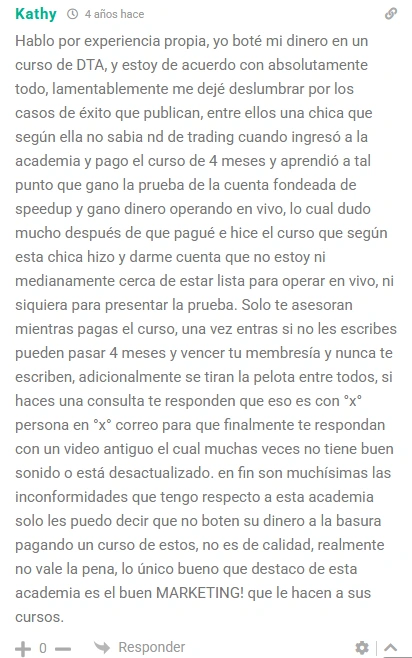
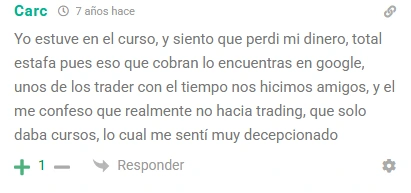
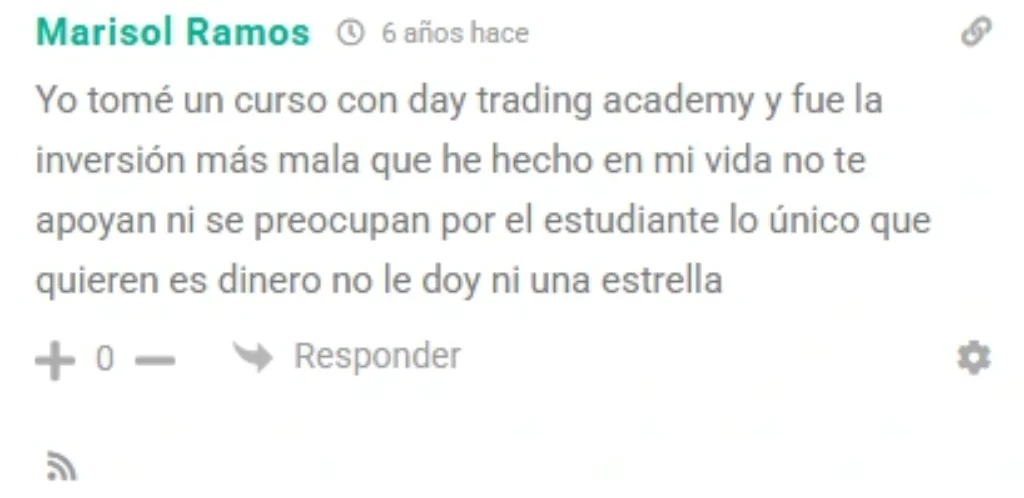
La gente empieza con ilusión, pero tarde o temprano se da cuenta. Lo de DTA era un cursito para YouTube, no era un curso de $2.500 (y mucho menos de $10.000).
2) La segunda: El marketing alrededor de Marcello Arrambide y su estilo de vida.
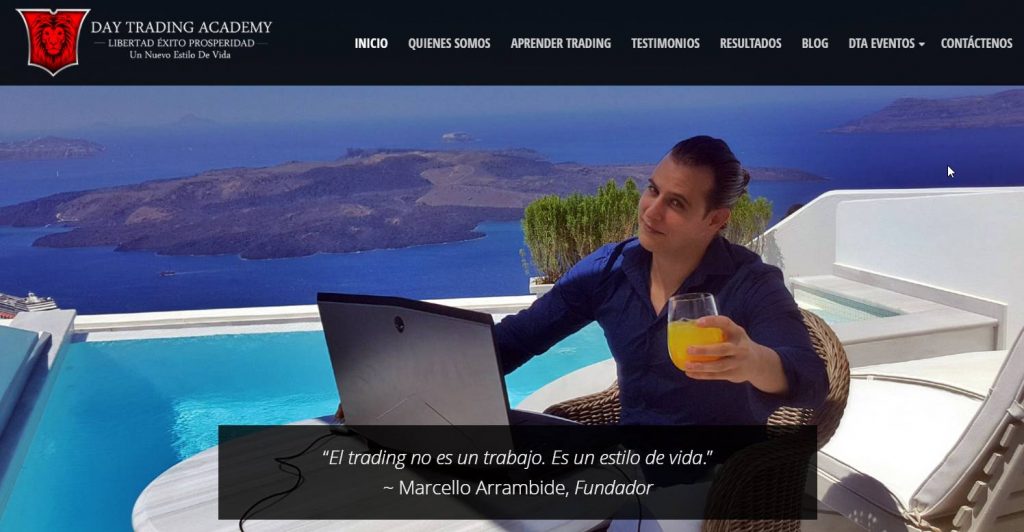
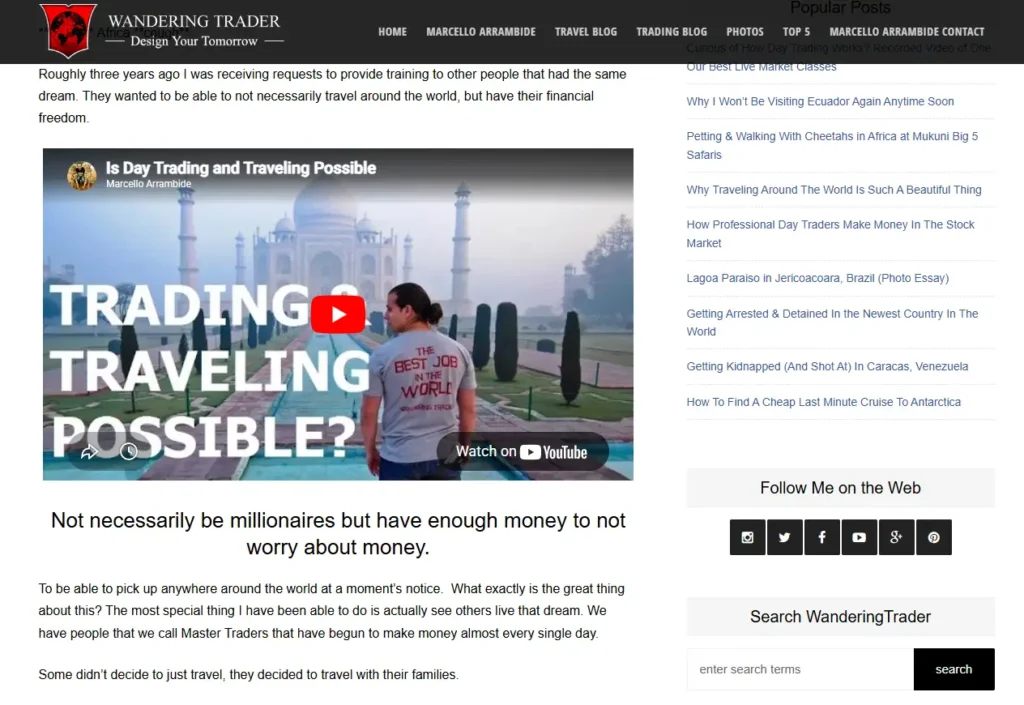
Yo mismo he criticado la imagen de trader exitoso que Marcello vendía: viajes, videos aspiracionales, playas paradisíacas, trabaja solo 2 horitas al día, etc.
El típico kit de vendehumo.
De trading nada.
A ver, no me mal interpretes… no me molestan las fotos de viajes y lujo. Lo que molesta es que se haga creer a la gente que esos viajes y vida de lujo que Marcello expone se ha conseguido gracias al trading, cuando en realidad todo se financiaba gracias a los cursos de $2.000 a $10.000 que vendía.
Pero la gente quería creer.
Los videos apuntaban al corazón de las ilusiones de quienes deseaban (desean) un cambio de vida. Estos comentarios que podemos encontrar en YouTube lo dicen todo.
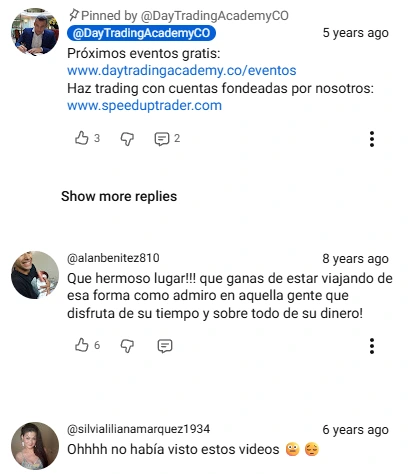
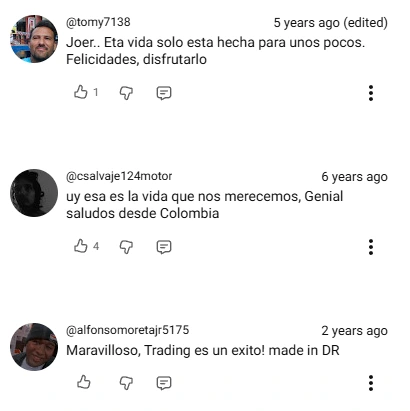
¿Y el trading?
Ninguno de los mentores de la escuela tradeaba (esto lo sé por un ex alumno). Hasta la canta-mañanas de Tori Trades, con todo lo que saca de vender cursos, se deja caer de vez en cuando por el mercado… aunque sea solo para guardar las apariencias.
Aquí nada.
Todo era para playas, hoteles de lujo y vender la ilusión de ‘tú también puedes vivir como yo (si antes me pagas)’.
3) La tercera (y muy importante): SpeedUp Trader… fondeo malo que no pagaba.
Day Trading Academy pasó a estar muy vinculada a SpeedUp Trader (una empresa de fondeo de las más cutres; Arrambide era su fundador).
O sea, desde una pésima escuela de trading derivaban traders a una pésima empresa de fondeo.
1 +1 = Lamentable.
Resumen: curso caro, marketing agresivo, valor discutible, humo, comunidad escéptica, SpeedUp Trader.
El modelo de “Arrambide” se fue quemando
Esto es de manual. Al inicio, tienes a los primeros alumnos motivados. Los que terminan el curso, suben una reseña. Los que no terminan, se van en silencio.
Con el tiempo, se acumulan perfiles distintos:
- Gente que compró impulsivamente.
- Gente que no tenía capital suficiente para operar.
- Gente que pensaba que en 3 meses iba a vivir de esto.
- Gente que empieza a notar que los mentores no hacen trading.
- Gente que se da cuenta de que eso de que ‘somos una familia de traders’ valía solo para que largaras el dinero.
- Gente que estudia un poquito más y termina notando que la estrategia de la escuela es ridícula y que ningún trader serio la utiliza.
Y cuando ese choque con la realidad pasa, aparecen reseñas duras. No siempre porque el curso sea “estafa”, sino porque la expectativa era irreal. Porque vendían una expectativa irreal.
Claro que también hay muchas prácticas cuestionables: ventas agresivas, presión por cerrar, promesas ambiguas, testimonios seleccionados, y políticas de reembolso que en la práctica son un dolor.
Si buscas, vas a ver el patrón en este tipo de escuelas (aplica a DTA y a muchas otras):
- Gurús.
- Lambos.
- Viajes (Playas y Dubai son un must have).
- Rolex.
- ‘Hice todo esto a los veinte y tantos…’
- ‘No es necesario tener una carrera para triunfar…. mírame’.
- Rentabilidades inventadas.
- Captación estilo multinivel (aunque no todas).
- Promesas de “deja tu trabajo”.
El Sensei del Trading es un caso muy similar…
Señales típicas…
No digo que todas apliquen a DTA, hablo de patrones comunes en academias del sector. Si ves varias juntas, entiendes por qué hay tanto ruido.
Ventas agresivas y urgencia constante
El “solo hoy”, “cupo limitado”, “últimas plazas”, “precio sube mañana”. A veces es verdad. Muchas veces es guión.
El problema no es el descuento. Es que te empuja a decidir sin pensar si el producto es para ti.
Testimonios sin contexto
Testimonios de alumnos que dicen: “me fue increíble”. Ok. Cuánto tiempo. Con qué capital. En qué mercado. En qué condiciones. Cuántas operaciones. Cuál fue el drawdown.
Sin contexto, un testimonio es solo emoción.
Resultados mostrados como si fueran típicos
Si te muestran un mes espectacular y no te muestran el mes malo, te están vendiendo una ilusión.
Un trader serio habla de rachas, de varianza, de riesgo. No de “hoy ganamos 500 dólares” como si fuera ir al gimnasio.
Ahí nace parte del “qué pasó”. La gente compra algo imaginado, recibe algo distinto, y explota.

Si fuiste alumno (o estás pensando entrar en alguna escuela similar), hazte estas 7 preguntas
Esto es lo práctico. Da igual si se llama DTA o cualquier otra.
- Qué mercado enseñan y por qué. Futuros, forex, acciones, cripto. Cada uno tiene estructura distinta.
- Qué parte es teoría y qué parte es práctica guiada. Y cuántas horas reales.
- Te enseñan gestión de riesgo desde el día 1 o al final. Si es al final, mala señal.
- Tienen un plan claro de progresión. Demo, micro, pequeño, escalado. O todo es “entra y opera”.
- Qué política de reembolso tienen y cómo se aplica. En papel y en la realidad.
- Qué pruebas te dan de consistencia. No un pantallazo aislado. Un historial, un método de registro, auditorías, algo.
- Qué pasa cuando terminas. Quedas colgado o hay comunidad real con feedback útil.
Si no puedes responder esto antes de pagar, estás comprando a ciegas.
Entonces, respondiendo al título: ¿qué pasó con Day Trading Academy?
Lo más probable es que no haya un solo “pasó”.
Lo que suele pasar con muchas academias de trading como Day Trading Academy (DTA), es una combinación de:
- Una etapa de crecimiento fuerte cuando el trading estaba de moda.
- Mucha exposición pública, mucho marketing, muchos alumnos nuevos.
- Acumulación inevitable de experiencias malas (por expectativas irreales o por problemas con el producto).
- Reseñas malas que generan desconfianza.
- Ajustes de estrategia, cambios internos, rebranding o menor presencia.
Al escribir este artículo podemos ver que la web de la escuela está caída (desde hace tiempo). Y el canal de YouTube se usa solamente para realizar lives con el típico análisis de premercado que no aporta nada a fin de redirigir tráfico hacia una nueva comunidad que lleva por nombre ‘SPKS’ – todo esto vía WhatsApp (imagínate).
Marcello no ha dado explicaciones. Creo que a esta altura ya no se necesitan… todo está muy claro.
Conclusión:
Si llegaste aquí porque viste menos a Day Trading Academy últimamente, o porque escuchaste rumores. Lo cierto es que no hay explicación oficial, y quizás en algún momento vuelvan (donde hay humo cenizas quedan)… de momento lo que sabemos es que la web de la escuela no da señales de vida y en las redes hace más de un año que Marcello no aparece.
El mercado cambia. Las modas cambian. Las expectativas chocan con la realidad. Y las academias, malas o mediocres, usualmente se diluyen.
La pregunta útil no es solo qué pasó con DTA.
La pregunta útil es: qué te prometen a ti para que te seduzcan con humo.
Ahí es donde se define todo. En serio.
🛡️ Aviso legal
Este artículo tiene fines exclusivamente informativos y refleja opiniones personales, experiencias de usuarios publicadas en redes sociales y análisis crítico sobre un producto educativo ofrecido al público. No se pretende en ningún caso difamar, desinformar ni afectar la reputación de ninguna persona o empresa mencionada.
Las imágenes utilizadas en este artículo son ilustrativas, capturas públicas o tomadas con fines de análisis crítico desde sitios web accesibles libremente en internet. Su uso se enmarca dentro del interés legítimo de informar y contextualizar.
Recomendamos a nuestros lectores investigar y contrastar diversas fuentes antes de tomar decisiones relacionadas con productos o servicios financieros.

Soy Norberto. Llevo más de una década invirtiendo y haciendo trading. También soy el autor del curso de trading Experiencia Topstep. Si quieres aprender a invertir y tienes dudas, escríbeme.
También te puede interesar
¿CÓMO EMPEZAR A INVERTIR EN BOLSA?

OPINIONES DE 5 EMPRESAS DE FONDEO POPULARES ENTRE TRADERS (UNA MUY MALA)
Reglas, costos y “letra pequeña”. Qué dicen los usuarios

CUANDO EL TAMAÑO SI IMPORTA: ¿POR QUÉ PIERDEN LOS TRADERS?
Por Qué Pierden los Traders: El Error #1 (Tamaño)